How to bring reconciliation into your daily life
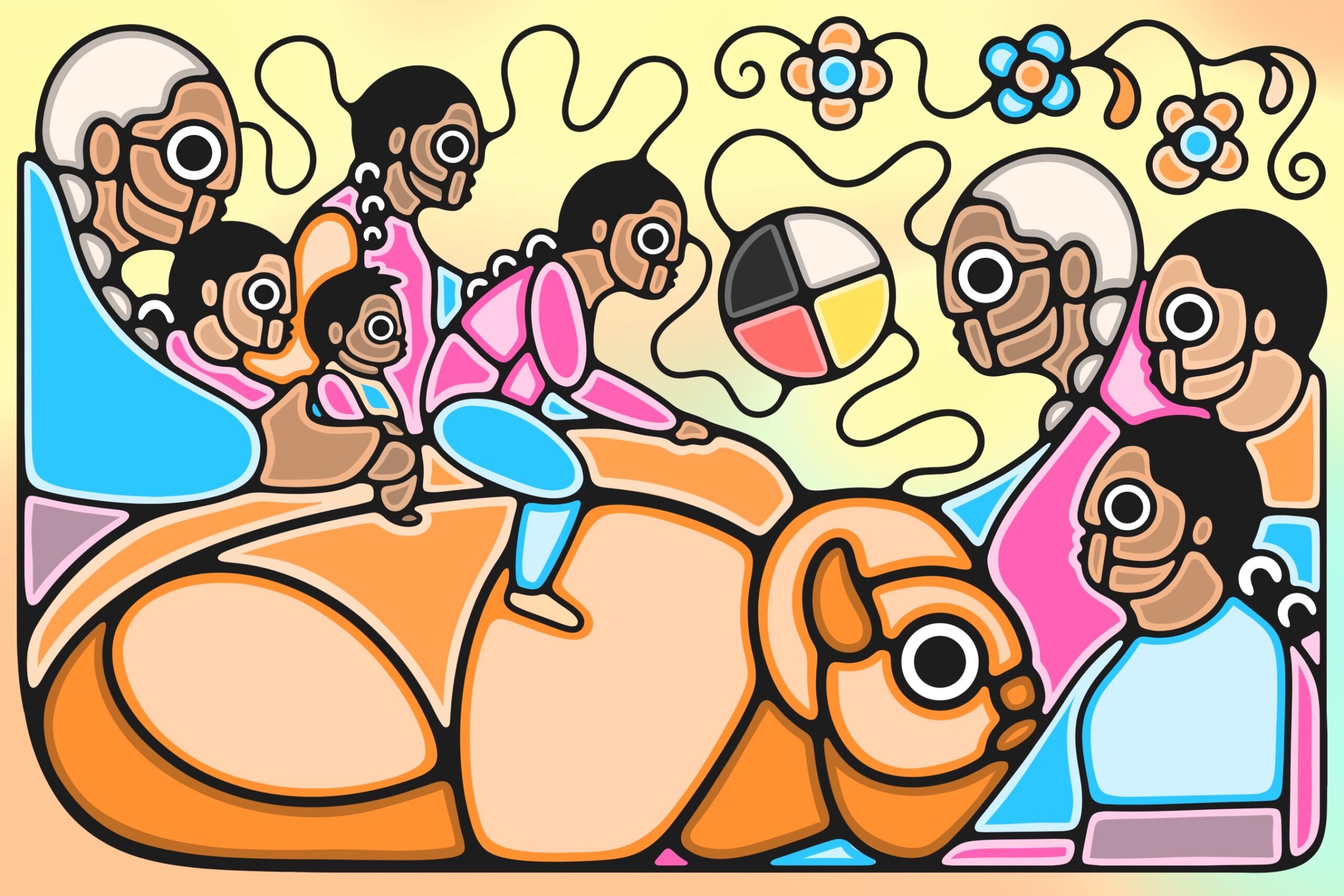
Our National Day for Truth and Reconciliation artwork was created by Anishinaabe Onyota’a:ka artist, Tsista Kennedy (https://hotdogwaterart.com).
Our National Day for Truth and Reconciliation artwork was created by Anishinaabe Onyota’a:ka artist, Tsista Kennedy (https://hotdogwaterart.com).
National Day for Truth and Reconciliation is a solemn day and one that invites each of us to reflect on how we can be a part of reconciling our collective past to build our collective future.
Occurring annually on September 30, National Day for Truth and Reconciliation is a day to “honour Survivors, their families and communities, and ensure that public commemoration of the history and legacy of residential schools remains a vital component of the reconciliation process.” (Source: National Centre for Truth and Reconciliation.)
As nurses and health-care professionals, ONA members are in a unique position to play a role in reconciliation. Many ONA members work directly with the public, meeting people from all walks of life, which means we’re in a position to ensure equitable care and embody the world we want to see.
As we commemorate National Day for Truth and Reconciliation, it can help to reflect on our country’s history and what we can each do to create a better future. We can acknowledge past wrongs and challenge ongoing racism against Indigenous people, especially as they access health care.
You can ask yourself: What does reconciliation mean to me? What does reconciliation look like in my family and community?
Watch the video below to hear from ONA members, leaders and staff reflect on what truth and reconciliation means to them.
National Day for Truth and Reconciliation is also a good time to revisit the original Truth and Reconciliation Commission’s (TRC’s) Calls to Action, especially since 2025 marks 10 years since the Commission’s final report was presented to Parliament.
Disappointingly, the majority of calls remain unanswered, including the seven calls relating directly to Indigenous health.
One of the calls to action is “to acknowledge that the current state of Aboriginal health in Canada is a direct result of previous Canadian government policies and to recognize and implement the health-care rights of Aboriginal people.”
This call might be aimed at governments, but we can take a leadership role in acknowledging how Canadian governments have failed Indigenous people and in advocating for their health-care rights.
Another of the calls to action is “to require all [nursing] students to take a course dealing with Aboriginal health issues, including the history and legacy of residential schools, the United Nations Declaration on the Rights of Indigenous Peoples, Treaties and Aboriginal rights, and Indigenous teachings and practices.”
While we welcome the day when medical and nursing schools include such a course in their curricula, schools are not there yet, and even if they were, that wouldn’t help the thousands of nurses and health-care professionals currently working. Thankfully, the University of Alberta has an excellent course on Indigenous issues in Canada – and it’s free and online!
We don’t need to wait for governments, schools or any other organization to act before we take steps to make things right.
As nurses and health-care professionals, ONA members are in a unique position to play a role in reconciliation.
Although the process to adopt the TRC Calls to Action have been slow, ONA has been steadily working over the past few years to embody reconciliation.
Since 2021, we have:
Brigitte Goar, ONA’s ARAO Specialist on Reconciliation, shares more about ONA’s recent efforts:
“This last year has been about building relationships with Indigenous communities and nurses. I was part of an advisory committee that had Indigenous nurses from across Canada on board with the Canadian Federation of Nurses Unions [CFNU]. I was honoured to be able to attend the CFNU Biennial Convention and be part of an apology to Indigenous peoples and an emergency resolution that came from the Truth and Reconciliation Commission’s calls to action.”
Our work is ongoing, and we are committed to it. We all have an important responsibility to advance truth and reconciliation, including your union.
Learn more about how ONA is taking action by watching the video below.
As time passes, reconciliation must give way to reconciliACTION. At some point we must finish talking about reconciliation and start embodying it.
The National Centre for Truth and Reconciliation offers six actions to take to play an active role in the reconciliation process:
In the video below, ONA members share what actions they’re taking.
Goar also has suggestions on how you can bring reconciliation into your daily life:
“Nurses can commit to reconciliation in a lot of ways. We can support Indigenous businesses, art and voices. We can also participate by practising cultural humility, acknowledging colonial harms, building trust with Indigenous peoples by speaking out against racism, and weaving respect and learning into everyday care. There needs to be small actions, self-reflection and advocacy, both inside and outside of the workplace.”
Learn more about the National Day for Truth and Reconciliation on the ONA website.
This is a standard popup that can be repurposed for general site-wide messages.
We use cookies to improve your experience on our website. To learn more, read our privacy policy.