Members reflect on strike that was
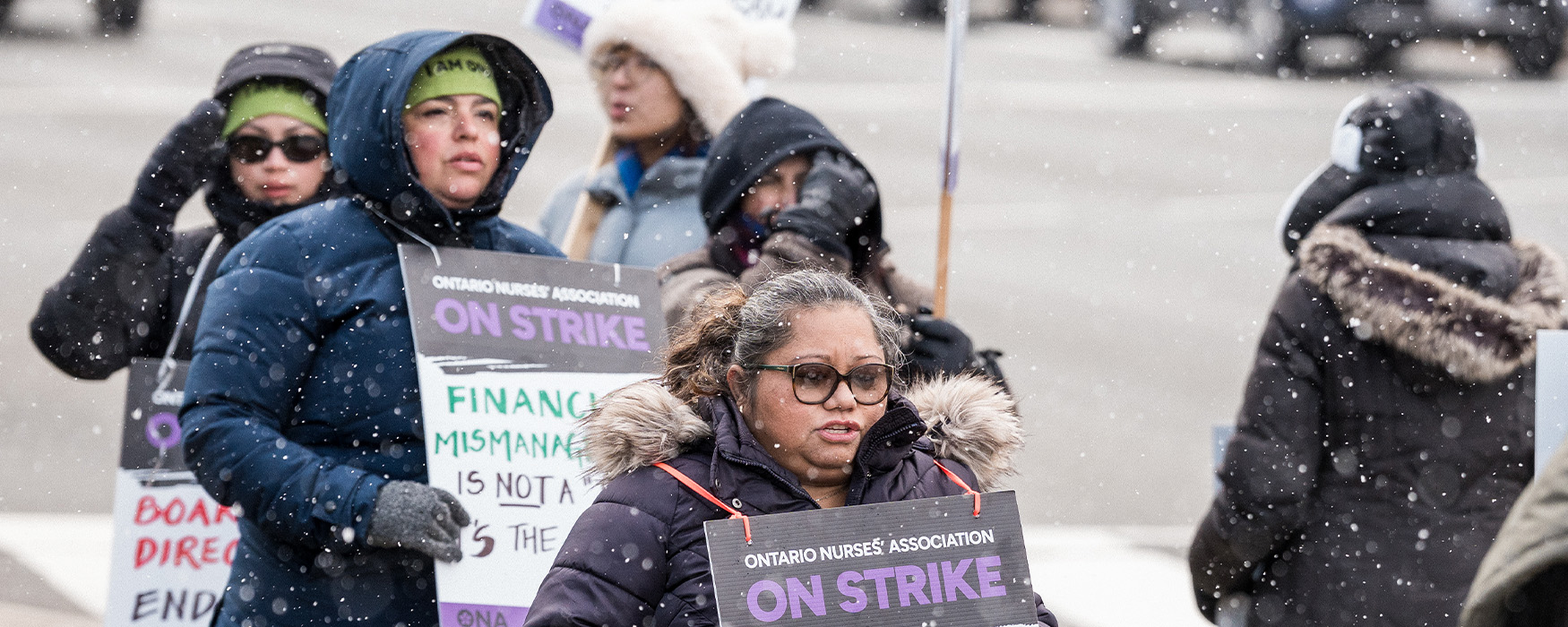
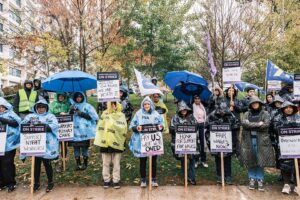
Dedicated ONA members from the North York Family Health Team didn’t let a little snow stop them from demanding a fair and equitable contract during their 13-week strike.
Dedicated ONA members from the North York Family Health Team didn’t let a little snow stop them from demanding a fair and equitable contract during their 13-week strike.
The strike may be over, but the fight continues.
That’s the takeaway for the more than 40 dedicated members from the North York Family Health Team (NYFHT), who braved 13 long weeks on a bitterly cold picket line this past winter, making it one of the longest strikes in ONA history.
The members, who provide ongoing and complex immediate and preventative care to approximately 95,000 North York residents that helps keep them out of overcrowded emergency departments and saves health care dollars, were fighting for a first collective agreement after voting to join ONA in 2024. They were offered zero per cent at the bargaining table, on top of wage freezes from 2009 to 2016 and subsequent increases below inflation. Read more here.
That was all the more deplorable considering that additional government funding provided to the employer for retention and recruitment, such as wage increases, was instead used to make up for their own budget deficit and financial mismanagement.
“[After that happened], it was extremely difficult to negotiate without money at the table,” says NYFHT Bargaining Unit President and registered pharmacist Rita Ha, a constant presence on the picket lines and support to her members. “This was made more challenging as Ontario Health and the Ministry of Health refused to get involved in a labour dispute caused by their own policies.”
But it wasn’t for lack of pushing back from these strong and dedicated members, who work out of 20 offices. Supported by staff, they targeted Premier Doug Ford, Health Minister Sylvia Jones and Primary Care Action Team Chair Jane Philpott, on top of their employer, throughout the strike.
That included calling and emailing them more than 2,000 times (with help from ONA members, sister unions and the public during phone zaps, and as requested in our emailer); meeting with MPPs from all parties; sending a delegation to Queen’s Park to attend Question Period; holding a moving media conference, writing a strongly-worded letter to the editor and speaking out in the news dozens of times; and picketing outside Premier Ford and Minister Jones’ offices and the hotel where Chair Philpott was speaking to the Association of Family Health Teams of Ontario Conference, attended by their employer.
“A poorly managed organization can take down everyone,” notes an NYFHT member we’re keeping anonymous. “People make mistakes, and that I understand. But what I don’t understand is the lack of accountability from people in power. I didn’t know I could be disappointed and heartbroken again and again and again from the people who are supposed to be my leaders.”
It’s that complete lack of accountability and transparency on how government funds are spent by primary care employers, such as family health teams (FHTs) that this strike definitively brought to light.
“The Ford government has a fundamental responsibility to ensure employers use public funding for the intended purpose or its goal of connecting every Ontarian with primary care will remain out of reach,” says ONA Provincial President Erin Ariss. “Building a strong primary care sector will remain impossible when employers like the NYFHT don’t prioritize or take advantage of hardworking health-care providers.”
In ONA’s recent Pre-Budget Submission to the Standing Committee on Finance and Economic Affairs, we recommended that the government “improve and enforce funding accountability requirements for FHTs and establish an accountability mechanism so they’re required to use government funds, such as retention and recruitment monies, for the required purpose.”
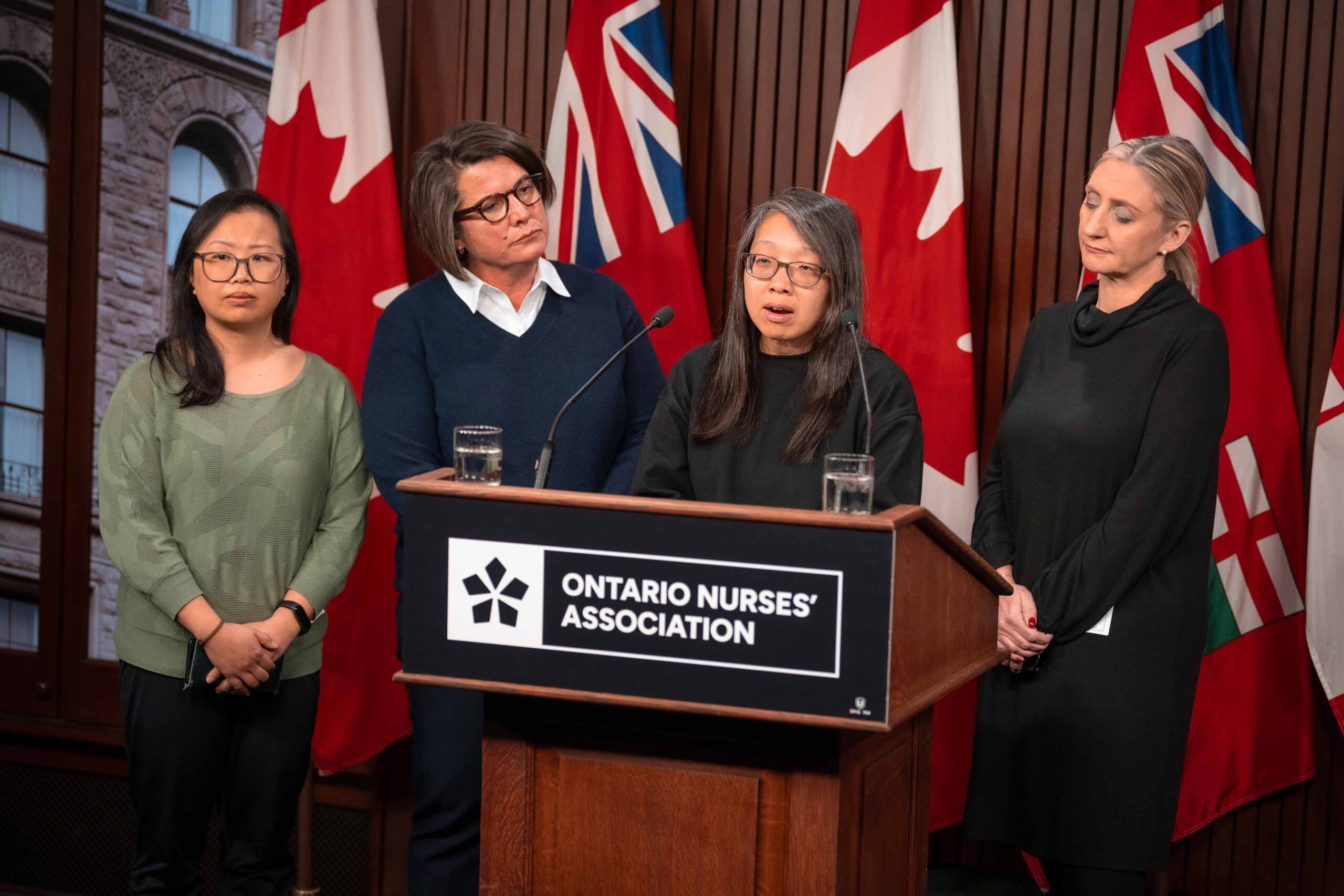
During an emotional media conference at Queen’s Park last December, North York Family Health Team Bargaining Unit President Rita Ha talked about the fight of NYFHT members, including Emily (left), as ONA Provincial President Erin Ariss and Ontario Federation of Labour President Laura Walton (right) offered support.
“Government funding also isn’t equitable in primary care,” adds Ha. “Independent FHTs like ours function as non-profit organizations with very limited, rigid funding and little oversight – unequal to FHTs embedded in hospitals or community health clinics that provide the same work. The government must change the funding structure for FHTs if it wants people to train and remain in a robust primary care sector. Funding for living wages must be sustainable.”
Despite the fact these members, which include several classifications such as nurse practitioners, registered nurses, registered practical nurses, registered pharmacists, registered dietitians, social workers, chiropodists, data managers, clinical coordinators, physician assistants and resource navigators, provide care from cradle to grave and are the first step in a strong public health-care system, they’re paid less than nurses and health-care professionals in other health-care settings.
Unless the government invests more than $500 million each year over the next five years to close this wage gap, the theme of ONA's hard-hitting provincial campaign, the exodus of nurses and health-care professionals we’re already seeing in this sector will only worsen. With more than 2.5 million Ontarians without primary care, a number that is expected to rise, this will be catastrophic for our province, compromising essential services, programs, timely access and comprehensive care.
And so, we fight on.
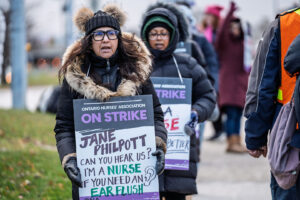
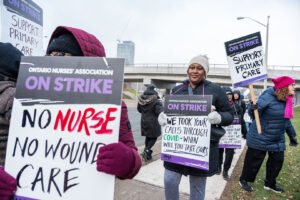
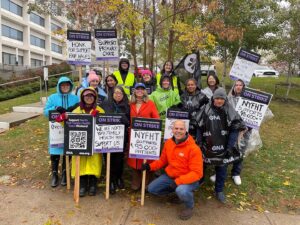
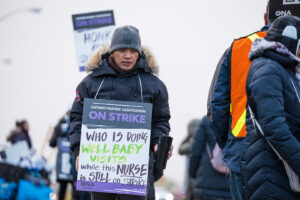
While Ha lightheartedly notes that the strike taught her members how to expand the use of F-words in their working vocabulary, dress properly for a Canadian winter and get 20,000 steps in a day, she stresses there were also some very serious learning opportunities.
“I learned in a strike that a release of information is strategic and things can change very quickly within 24 hours. A wise man told me that less is more and not to react so fast. I learned public speaking is possible, especially when following fantastic speaking notes from ONA. I learned everyone copes with stress in different ways. Some people need an action, some need to yell a lot, some need a hand to hold and some need to withdraw. The members I relied on the most were the ones who could shake it off and still answer my emails and texts late at night.
“I also heard so many interesting stories and great ideas from the most unexpected members. Diversity was our strength. We reached different cultures, media outlets and mobilized others by being human and listening to our diversity.”
But what stands out to her the most is the overwhelming support and solidarity of others, including the “unbelievably generous donations” her members received to help them keep up the fight from fellow Locals and members, staff, sister unions, individuals and complete strangers right across the country.
“People travelled to our picket line between and after work schedules, setting aside family time and personal downtime to stand and rally with us. People passing by offered tears of support, coffee and Timbits, a media contact or other helpful intel. Some members came to our picket line multiple times despite the snow, wind and rain.
“Morale on the picket line always improved when we were supported or joined by others. It was important because we felt unheard by our employer, the government and our physicians, and that what we were doing was wrong. To have people join the picket line meant they listened to our story, understood our story and validated our story.”
But they also became experts at “making each other smile and laugh,” she adds, noting that karaoke, raps and chants were commonplace on the picket line. “We celebrated birthdays and other milestones. We allowed for flexibility and kindness with the picket schedule. And while coffee and donuts are great, homemade treats, hot tea and soup were always special.”
As the days dragged into weeks, that became even more important.
“The most challenging part was reminding each other that while we’re entitled to our own opinions, we took action based on the majority,” Ha says. “We couldn’t act based on our individual judgement; we had to let democracy work. It was equally challenging to hear heartbreaking stories from members about the impact of being on strike, financially, mentally and physically, and the struggles they had to overcome to make it to the picket line or stand in solidarity.”
But, she notes that was also the most rewarding part: “to see these same members break through or set aside these challenges and still come to the picket line. They were still thankful we were doing everything to fight, and would remind me to keep us moving forward and to not let their struggle be in vain.”
Echoes the anonymous NYFHT member, “My strike formula is this: Rage and heartbreak + the love and support of my work family = what fueled me to keep showing up to the picket line and fighting back against injustice day after day for 13 long weeks.”
Team-based comprehensive primary care is a worthwhile model of care that can’t be done by physicians alone. But funding needs to be there.
And while they didn’t get everything they wanted in the settlement, Ha is extremely proud of her members.
“Through fear, frustration and tears, we held the picket line. To the last day and despite some disagreements, we had just as many members come to the line as in the beginning. This is a team that knows what needs to get done in primary care.
“The NYFHT has always been a model of the team-based primary care that this government wants to promote and scale up. Our team made it happen despite being underfunded for over a decade. All it takes is one bad apple to spoil it all. Those who remain will continue to pick up the pieces, and our team will come back together. But I warn Doug Ford, Sylvia Jones and Jane Philpott to not let the same bad apple spoil it for others. Team-based comprehensive primary care is a worthwhile model of care that can’t be done by physicians alone. But funding needs to be there.”
For that reason, she urges other members and FHTs to learn from their experience.
“I hope other FHT members will find the courage to stand up for their rights, as I have heard horror stories about mismanagement at other FHTs. For many years, we didn’t realize how unprotected and labour-unconscious we were at our FHT. I hope this strike reminds leadership at FHTs to do the right thing to advocate, protect and work with the providers that make team-based primary care happen. If FHTs remain silent, change won’t happen.”
This is a standard popup that can be repurposed for general site-wide messages.
We use cookies to improve your experience on our website. To learn more, read our privacy policy.