“ONA is safety:” From affiliate student to ONA member

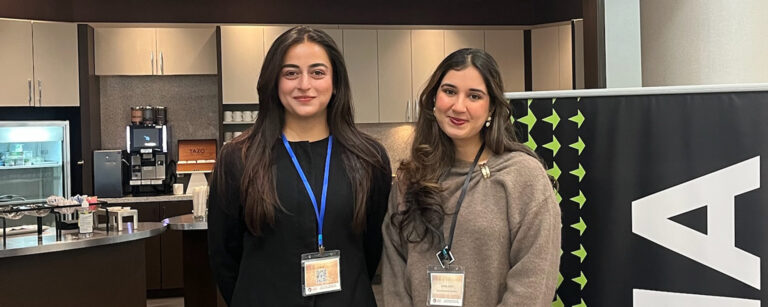
ONA member Tiffany McEwen, RN.


ONA member Tiffany McEwen, RN.
In the following Q&A, ONA member Tiffany McEwen, former President of the Canadian Nursing Students’ Association (CNSA), talks to F-Word about how she transitioned from a nursing student to an RN, and what ONA means to her.
Tiffany McEwen (TM): Before going back to school for nursing, I worked in a family doctor’s office as a medical secretary for several years. I realized through this work that I really enjoy patient care, but felt that I couldn’t do everything I wanted within the scope of that role. I brought up going to nursing school with the nurses that worked there, and they encouraged me, saying I would be great at it. It was a tough decision though. Not only was I making good money, but I was worried I was too old to go back to school and would have to do a lot of preparatory work to even apply. But in the end, I decided that yes, I’m going to do this for my future. Then COVID hit, and my decision was solidified.
TM: Being the President of the CNSA allowed me to develop a strong foundation in leadership and collaboration skills across different avenues. I’ve brought these interprofessional and interpersonal skillsets into my work as a freshly graduated nurse. It’s given me an advantage in being able to work effectively with the other health-care professionals on the team. I think my experience with the CNSA also gave me a more thorough understanding of the current climate of nursing and unions, which helps me identify areas in which I might need additional support.
TM: Yes, I’m naturally geared towards leadership. I really enjoy teaching, guiding and being part of a team. I see myself starting small within my Local in union leadership roles. Moving forward, I would like to do nursing scholarly work, such as clinical instruction. I definitely enjoy being a leader.
TM: It was jarring. I sort of knew what to expect given my work with the CNSA. I had heard a lot about nurses experiencing transition shock upon entering the field, but it’s different when you go through it yourself. There’s no way to truly prepare for it. In January 2025, I started my work as a licensed RN in an emergency department and finished my orientation the following April. I remember thinking, I’m so overwhelmed. I expected to be physically exhausted but wasn’t prepared for the mental fatigue. My brain is fried from learning and acclimatizing to patient care for 12 hours every workday. Despite all of that, I’ve honestly enjoyed it. I’ve learned so much in these past months that I couldn’t possibly have learned in school. I’m lucky to work in an area that’s very supportive, where nurses help one another with skills they aren’t comfortable with yet. Some days I’m so overwhelmed I ask myself, did I make the right choice? What have I done? But at the end of the day, I really do enjoy my work and it’s been very fulfilling.
I’ve always had such a positive relationship with ONA, so I’m excited for our next chapter together.
TM: As a bona fide member, I get the full representation and benefits that I didn’t as an affiliate. I get a clearer, more in-depth look at which activities are going on within the union. My mind has switched from, how is ONA helping students? to how are we helping each other? Being an affiliate member was cool because I got to see a glimpse into my future, but under a different lens. I’ve always had such a positive relationship with ONA, so I’m excited for our next chapter together.
TM: I feel like I was well prepared and I’m so grateful that I was able to be an affiliate member first. When you’re going through the new graduate transition, everything is already so overwhelming, and then to try to learn what your union does is a lot. I didn’t have to worry about understanding how ONA represents members and when to go to them for help; I already knew.
TM: Keep yourself organized and go easy on yourself. Nursing school is a tough, challenging time. You go through many transitions personally and professionally. You’re learning so much every day and the workload is super heavy. I think many students who choose nursing tend to be high achievers, and we can be too critical of ourselves and the grades we earn. I struggled with this personally and would beat myself up about not maintaining the high average I had in my previous academic experiences. But at the end of the day, you’re going to learn much more on the job than courses will teach you. Focus on being the best caretaker of yourself rather than memorizing every line from a textbook – that will come with time and practice.
TM: Overall, ONA is already doing a really good job at supporting students, especially in the last few years with student involvement. I know of a few hospitals with clinical extern positions that are represented by ONA too, which is great. I would like to see ONA continue to create opportunities for students to participate in union activities. For example, promoting students attending a rally or union business meeting, where students are exposed to jargon and processes in a low-pressure environment. Many students haven’t even been exposed to the concept of a union, so these opportunities serve as very helpful introductions.
TM: To me, ONA means partnership, team and family. People who have my back, even when it’s not easy to speak up for or protect me as a nurse. The other day I was having a conversation with someone about our inability to strike in our sector. If something happens and we need to defend ourselves, we rely heavily on our union to fight and bargain for us. We can’t just walk off the job [ONA recently launched a Charter challenge on the right to strike]. ONA means I have somebody fighting for the safety of myself, my coworkers and patients, as well as the future of nursing. ONA is safety.
TM: My F-word is “family.” The family I’ve built within my workplace, Local and ONA as a whole. Nurses and health-care professionals are family, and ONA helps cultivate and protect that family.
This is a standard popup that can be repurposed for general site-wide messages.
We use cookies to improve your experience on our website. To learn more, read our privacy policy.