For ONA member Emerald Lacaille, becoming a social worker seemed almost destiny.
“Like many health-care workers, we join the field we’re in because it has personally impacted us,” explains Lacaille, who works at the North York Family Health Team (NYFHT). “The concept of the ‘wounded healer’ is no stranger to social work. As a teen, I received care from a gem of a social worker and I have her to thank for finding my true calling.”
While there was a time before that realization when Lacaille dreamed of becoming a lawyer because they were so passionate about defending those who have been wronged, “luckily, advocacy in social work gives me the gift of fighting for those who aren't heard and helping them heal,” they say.
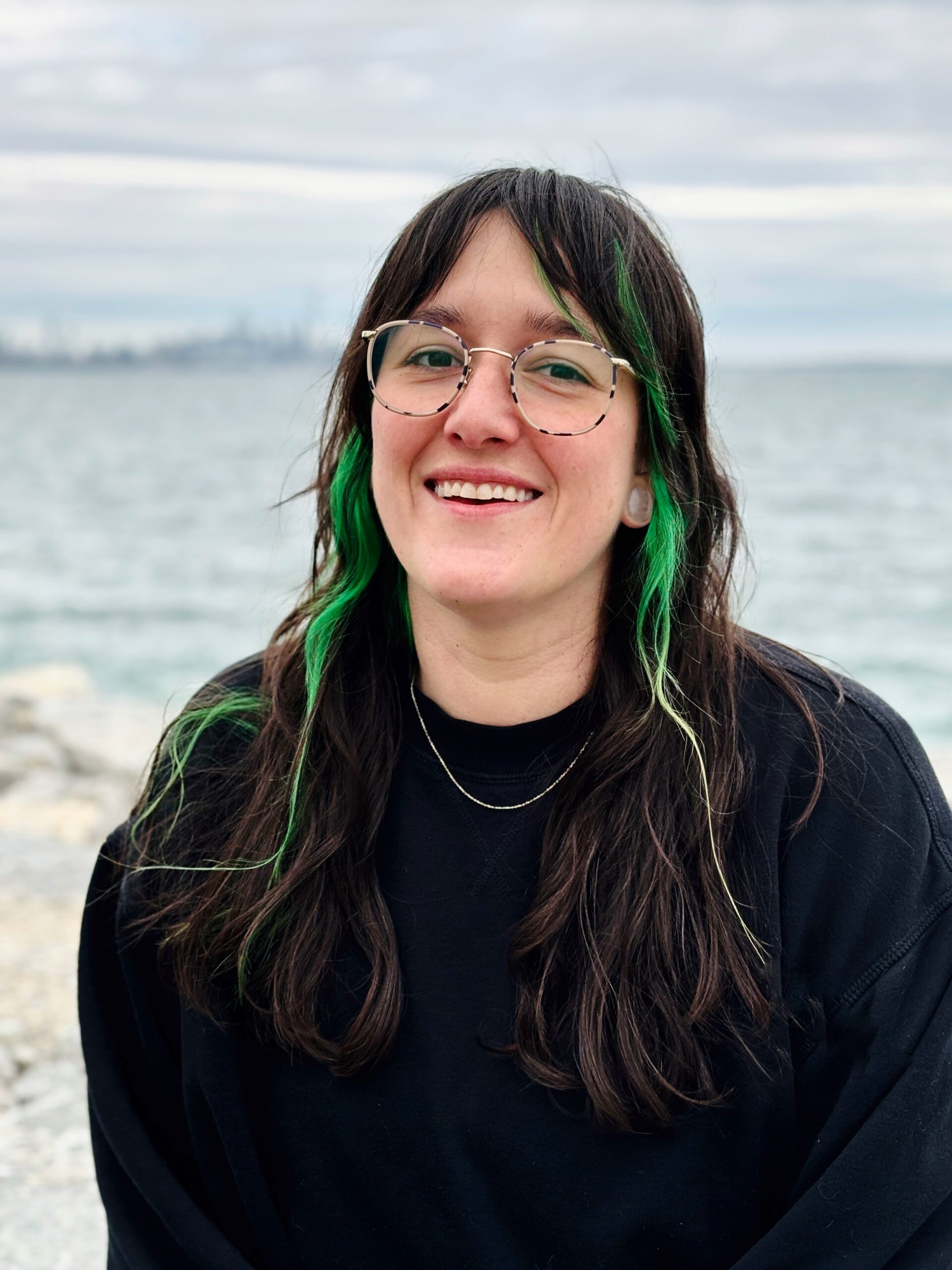
ONA member Emerald Lacaille says the most rewarding part of being a social worker “is the positive impact you see in the lives of your patients.”
“I started out as a child and youth care practitioner in 2009, spent many years working in youth shelters and group homes and then moved to supportive housing for adults struggling with mental health and addictions. This shaped much of my philosophy surrounding harm reduction, advocacy and fighting against injustice. I then went back to school to get my Master in Social Work, and have been working as a social worker and psychotherapist since 2023.”
As part of a family health team comprised of several health-care classifications providing ongoing and complex immediate and preventative care to approximately 95,000 residents in North York, Lacaille says their work is multifaceted, and includes:
A more simplistic way of describing what Lacaille does for a living is what they say to their own four-year child.
“I explain it a bit like this: I’m someone who helps people learn how to feel and express their feelings when they don't know how to do it in a way that feels good. I help people whose brains are too busy and too loud or wired differently. I also help people who don't really have anyone else in their lives to help them with life stuff to get that settled. Not everyone has family and friends, and not everyone can speak the same language, and they just need a get-stuff-figured-out person. That's where I come in.”
Because of that, Lacaille emphasizes that social work and mental health care are as important in positive health care outcomes as physical health care provided by medical staff.
“We’re humans, and a holistic approach to care ensures the best outcomes for our patients,” they note. “Social workers are the glue that bridges diagnoses, underlying mental health conditions and access to medical care where otherwise inaccessible. We’re the heart and soul of health care. We’re capable of making time to sit down and work through deep-rooted emotions, fears and grief.”
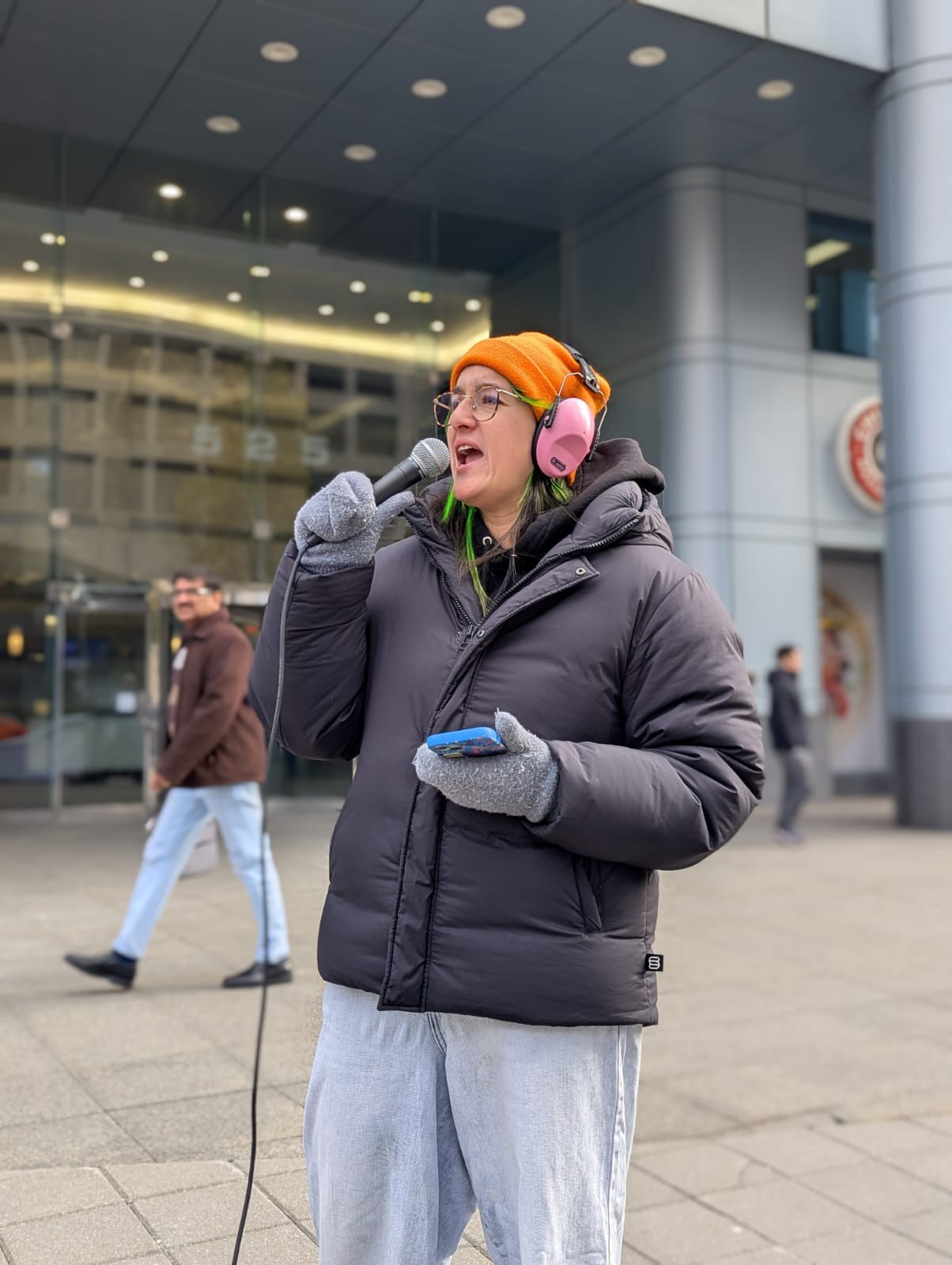
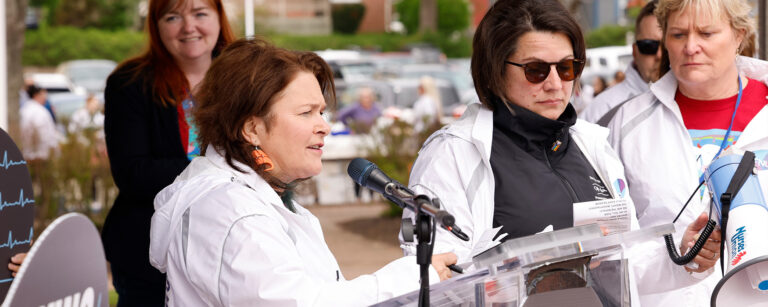
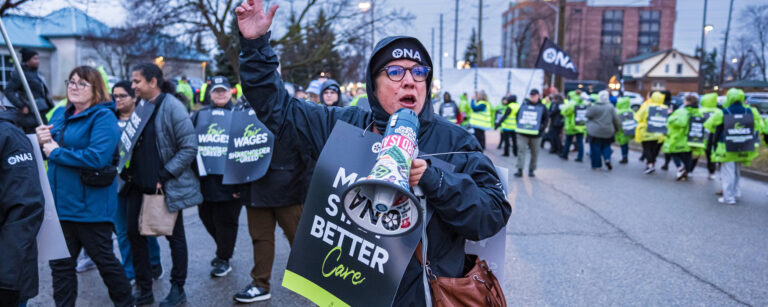
During the strike of their North York Family Health Team, social worker Emerald Lacaille became very comfortable with a microphone, encouraging their fellow members to keep up the fight.
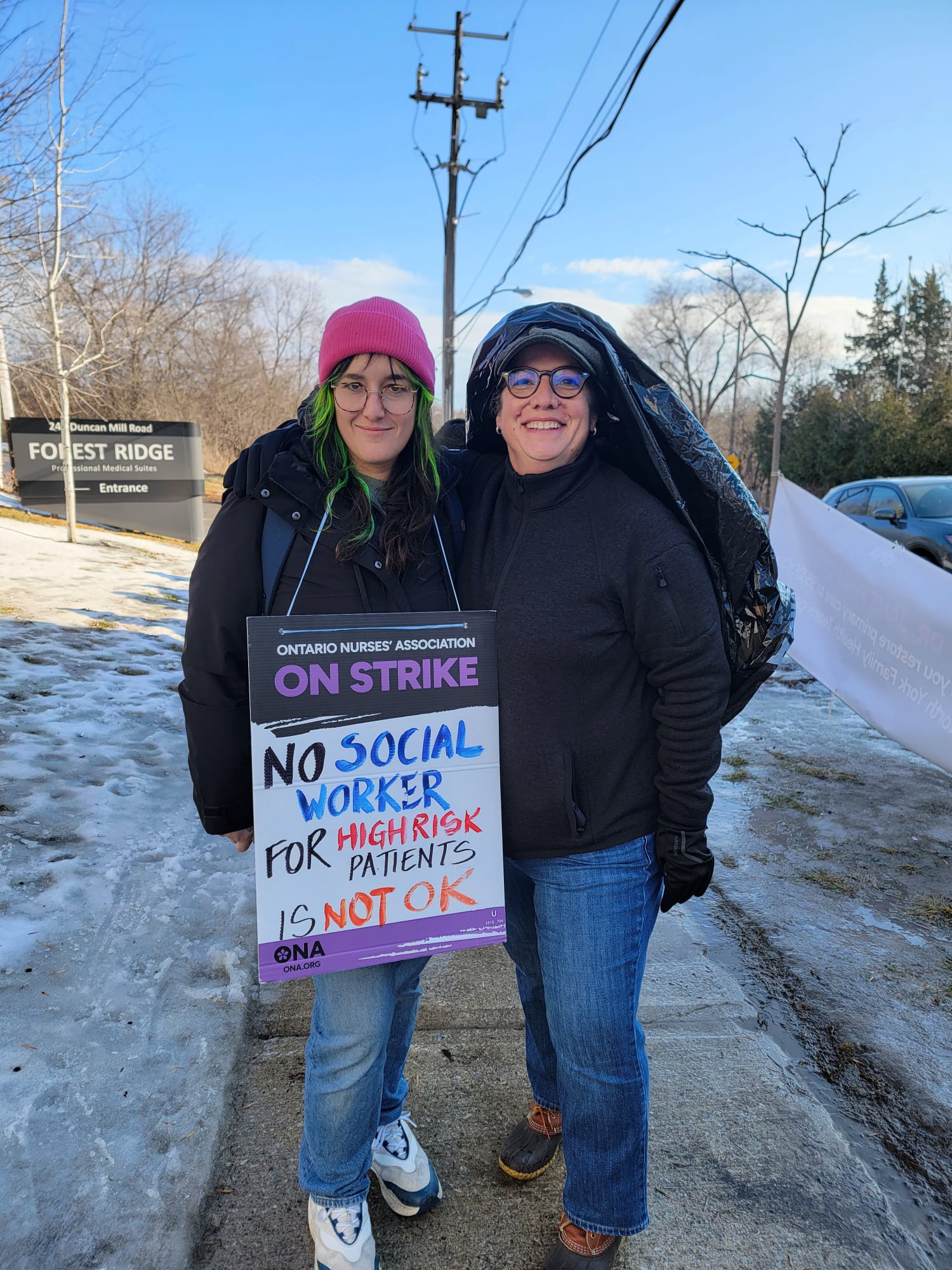
Pictured with ONA Provincial President Erin Ariss during the recent North York Family Health Team strike, ONA member and social worker Emerald Lacaille wears a placard that tells it like it is.
And that makes a tremendous difference, with Lacaille noting the most rewarding part of being a social worker is the positive impact they see in the lives of their patients.
“It can be as small as making a behavioural change to combat their insomnia or as big as setting challenging boundaries to promote healthy relationships,” they explain. “No matter the scope, it all makes positive changes in their lives. Those successes and the relief they feel is what fuels me to keep going. Your therapist is cheering you on from the sidelines always.”
While Lacaille adds that they receive very kind and thoughtful feedback from patients about the work they do together, they don’t do this work for the affirmations.
“But when I do hear from them, it warms my heart. Patients have shared they’re grateful for having someone in the trenches with them during the worst moment of their lives, having someone move through grief with them, having someone support them to leave an abusive relationship and find supportive housing, or even how to support their neurodivergent child ultimately strengthening their bond.”
But, like most professions, social work is not without it’s challenges, which Lacaille describes as largely structural.
“Barriers can be related to financial needs, housing stability and affordability, long wait-lists for services as well as the limitations we have in providing short-term counselling when we know long-term counselling has better health outcomes,” they note. “It's heartbreaking to see what a patient needs and not be able to give it to them. The best thing I can keep doing for my patients is to advocate for policy and structural change from within.”
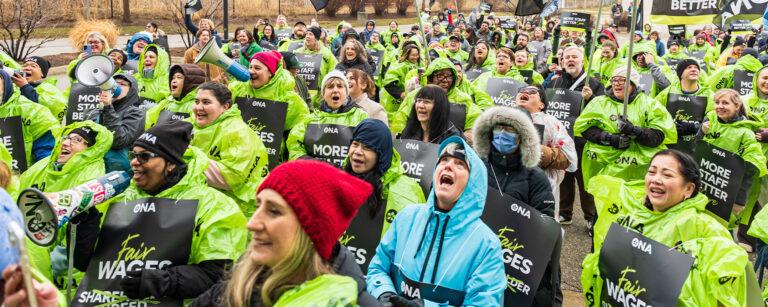
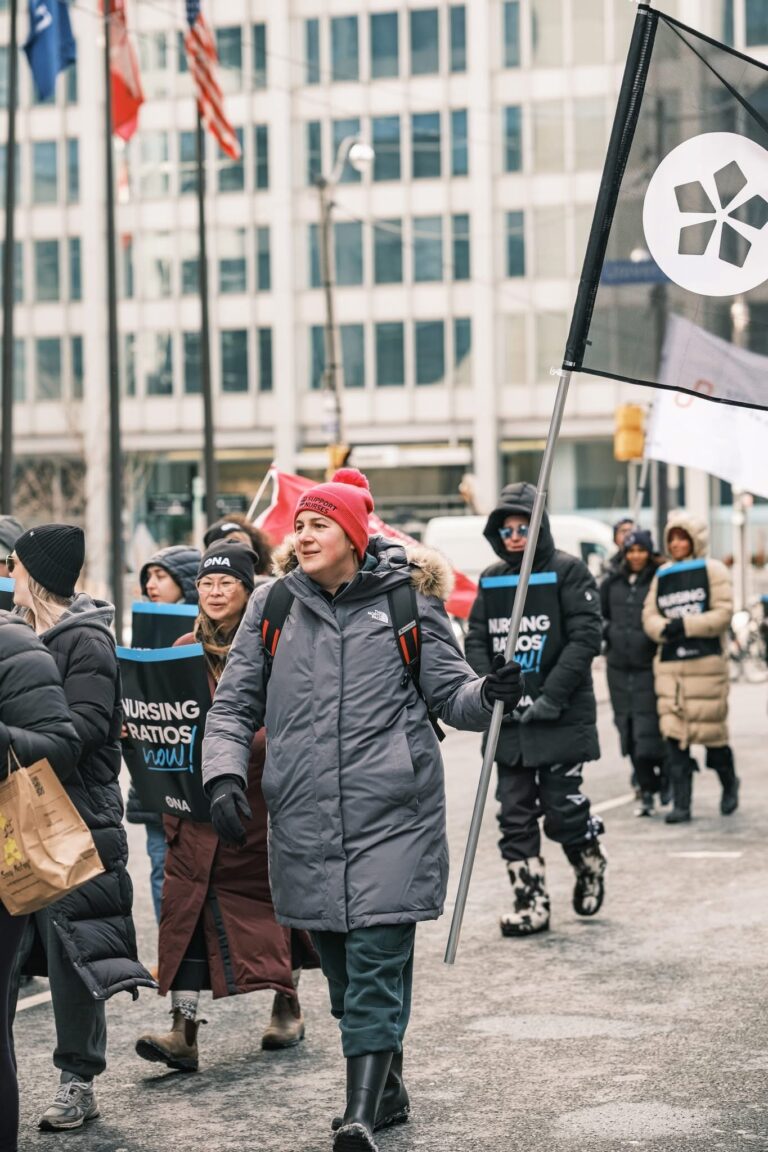
Then again, Lacaille is no stranger to advocacy, having spent 13 weeks on a bitterly cold picket line this winter fighting for a first collective agreement against an employer who was offering zero per cent. Apart from bringing attention to the NYFHT’s serious mismanagement of government funds meant for recruitment and retention, including wages, Lacaille jokes the strike taught them how to dress for Canadian winters, eat with mittens on, their body’s tolerance level for caffeine, the need to update their insoles and that they have physical limits.
“But I also learned that I have a work family, whereas before the strike, I didn't know more than five people. I know who really has my back and who shares similar values of dismantling oppression. I know my work family would show up and fight for me in a second, and I would do the same for them. We may have lost some things, but I gained a family and relationships like never before. That is priceless.”
And that camaraderie and solidarity has become increasingly stronger since the 40-plus members of NYFHT voted to join ONA in 2024.
“I never worked in a union in a specific position like I am now, but I have worked in several unionized environments, and could never picture it any other way,” they say. “I always knew the union had my back if things weren't right and I had the support of my local unions at the time. When I started where I am now and we weren't unionized, I felt like I had no voice or power to change things. I felt stuck and never realized how much I missed being in a unionized environment.”
Patients have shared they’re grateful for having someone in the trenches with them during the worst moment of their lives.
With the chronic underfunding and understaffing of Ontario’s health-care system, Lacaille emphasizes that voice is even more critical.
“Health-care professionals are burning out at alarming rates, and the well-being of my peers is rapidly declining. We’re our own health-care emergency. We’re told to do more with less. We’re told to accept wage freezes. We’re told there’s no money to account for inflation or cost of living. We’re told to live with it and show up and give 110 per cent every day. This isn’t sustainable.
“I see more and more peers leaving for private sector work because it pays better and they have agency over the work they do. That’s not the health-care system I want. I want free, accessible, funded and exceptional health care for all people in Ontario. I want to see our public health sector prioritized and appropriately funded. As health-care workers and as patients, we’re worth it. We deserve it. We need to advocate for better wages, better ratios, caseloads and long-term retention in public health care. If we don't do it, who will?”
For that reason, Lacaille urges their fellow members to “make some noise” by ensuring your concerns are known to decision makers.
“Historically, change doesn't happen by asking nicely. We need to disrupt and dismantle this broken system. We need to rebuild something sustainable. And that starts with us.”
This is a standard popup that can be repurposed for general site-wide messages.
We use cookies to improve your experience on our website. To learn more, read our privacy policy.