More than 1,900 front-line RN and health-care professional positions have been cut across Ontario since January 2025, resulting in the loss of more than 3.1 million hours of direct patient care annually.
Behind these numbers are nurses who know all too well the challenges of providing quality care with fewer resources, patients waiting longer for treatment and a public health-care system increasingly stretched beyond its limits.
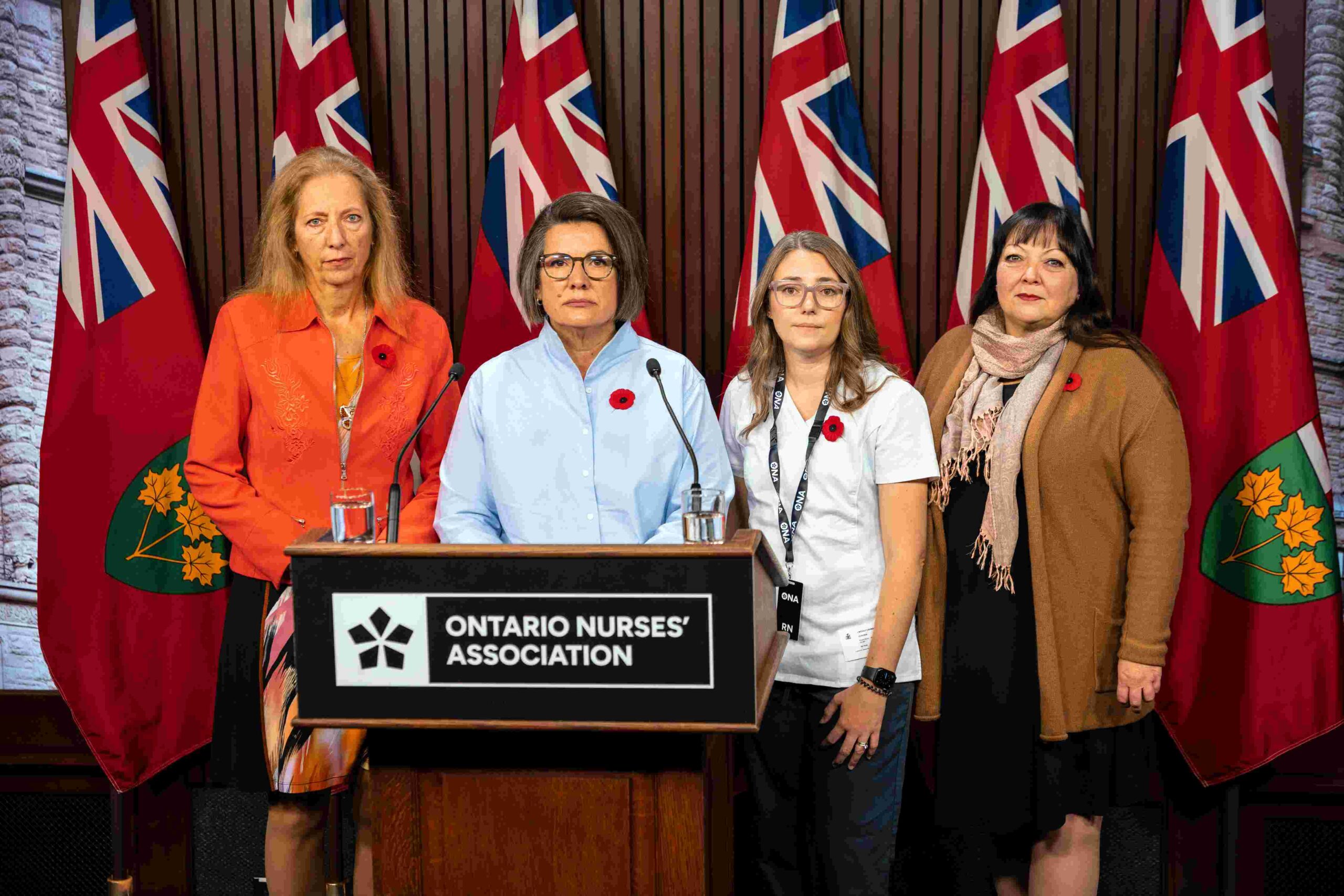
At an October 28 media conference at Queen's Park, ONA called on Premier Doug Ford and his government to immediately halt the cuts and implement mandatory nurse-to-patient staffing ratios.
“Make no mistake, these are Ford’s nurse cuts, and they’re a public safety issue,” said ONA Provincial President Erin Ariss.
Ariss warned that continued reductions in RN positions threaten patient safety and place additional pressures on an already strained health-care system. Read more here.
“Cutting or replacing RNs is not a harmless staffing shuffle. It removes the professionals who have the expertise to save lives when seconds matter,” she added.
Behind the numbers
For front-line nurses, the impact of staffing cuts extends far beyond the loss of positions.
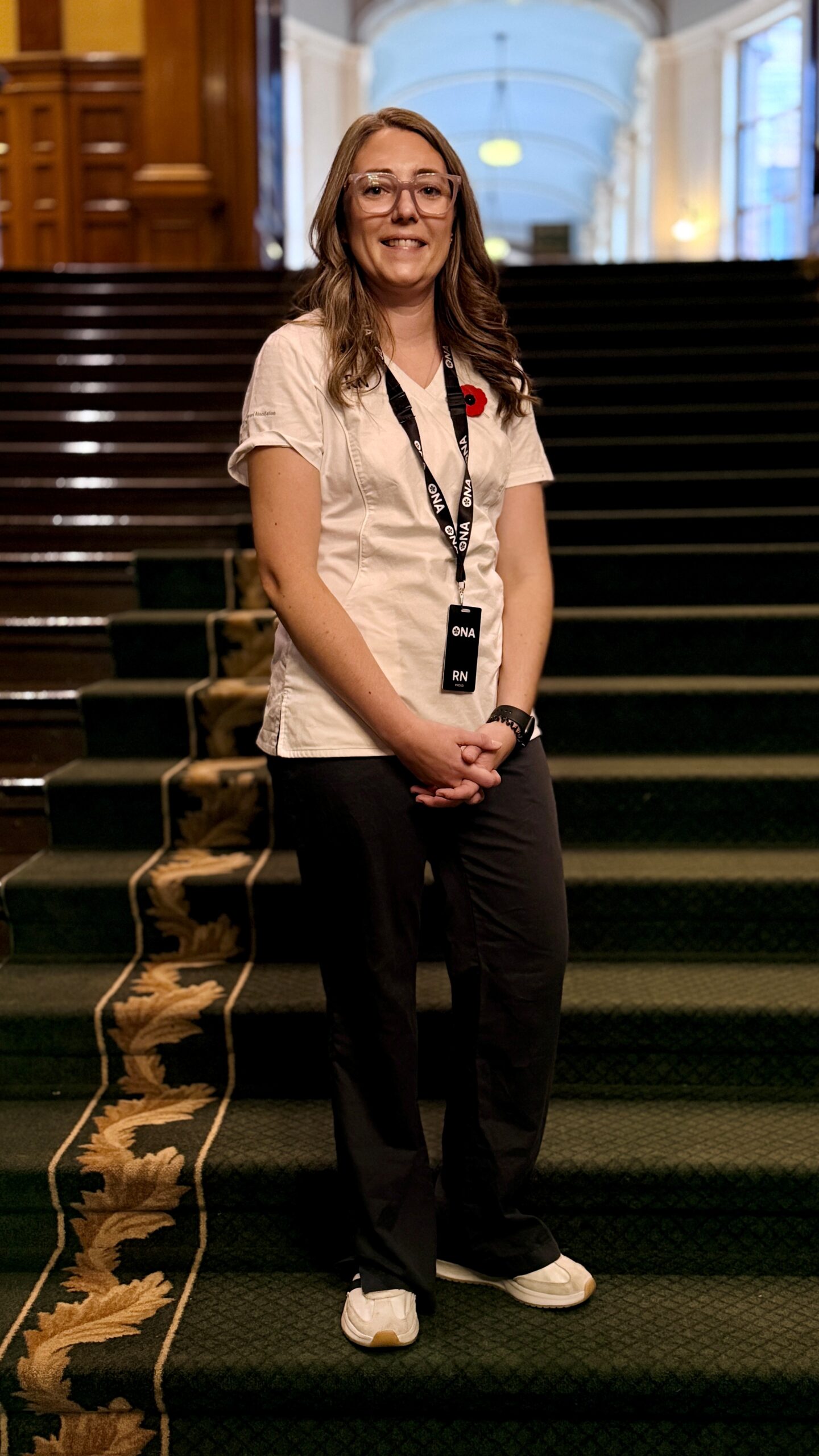
Lindsay Carnahan, RN, Bargaining Unit President at London Health Sciences Centre (LHSC), joined the media conference to share the realities nurses and their patients face.
LHSC executives are seeking to eliminate approximately 288 RN positions over five years, with plans to replace approximately 188 of those roles with other health-care professionals.
Cuts have affected operating rooms, mental health units, critical care and pediatric units, where patients often require specialized nursing care.
Between January and October 19, 2026, nurses at LHSC submitted 675 unsafe workload forms, a 165 per cent increase compared to the same period in 2025.
“We go into what I call a ‘task-focused’ mode each shift. We prioritize essential duties and tasks, but this leaves limited time for meaningful patient interactions and the opportunity to build therapeutic relationships,” Carnahan said.
But beyond the statistics, Carnahan noted one of the hardest parts of being a Bargaining Unit President is witnessing the moral distress experienced by fellow ONA members.
Speaking after the press conference, Carnahan described the frustration of hearing from colleagues who know the standard of care their patients deserve but are struggling to provide due to staffing pressures.
As an RN herself, Carnahan understands these challenges firsthand. Not only is this taking an emotional toll on her, but also on her colleagues, who are experiencing overwhelming workloads and turning to their union for assistance.
Despite these pressures, Carnahan remains committed to advocating for fellow members, using collective agreement protections and encouraging nurses to turn their frustration into collective action.
Patients paying the price
The consequences of inadequate staffing are also being felt by patients and families across Ontario.
At the media conference, Ontario Health Coalition Executive Director Natalie Mehra shared examples of patients experiencing complications and delays because of insufficient nursing care.
In one case, she described a hospitalized patient who developed two pressure ulcers. She raised concerns about how staffing shortages affect nurses’ ability to provide essential monitoring and preventive care.
Mehra also shared her family’s experience navigating a Toronto rehabilitation hospital, where limited staffing affected access to nursing care and rehabilitation therapies.
“There are no redundant nurses in our public hospitals in Ontario,” she stressed.
Her remarks reinforced concerns about the consequences of eliminating nursing positions when hospitals are already struggling to meet patients’ needs.
Holding Ford accountable
Ontario NDP Health Critic France Gélinas, MPP for Nickel Belt, joined ONA at the media conference in calling out the Ford government for its approach to funding Ontario’s public health-care system as hospitals continue to eliminate front-line nursing positions.
Gélinas criticized the government’s decisions, warning that ongoing cuts are putting patients at risk and placing additional pressure on an already strained nursing workforce.
“The only way you can make it make sense is if you want to privatize our health-care system,” she said.
In response to the growing staffing crisis, Gélinas referred to her private members' bill to establish nurse-to-patient staffing ratios in Ontario hospitals. MPPs will vote on the bill on November 25.
The proposed legislation would address one of ONA members' key demands: ensuring nurses have manageable patient assignments so they can provide safe, quality care.
Gélinas urged Ontarians to speak out and hold the Ford government accountable for protecting public health care.
ONA demands action
Long story short, Ontario can’t afford to lose more front-line nursing care. ONA President Erin Ariss reiterated the demand for an immediate moratorium on cuts and the implementation of mandatory nurse-to-patient staffing ratios.
“The loss of more than 3.1 million hours of care should be a wake-up call for Premier Ford and every Ontarian,” said Ariss.
As ONA members prepare for provincial bargaining in our hospital and Ontario Health atHome sectors, it's crucial to remain committed to protecting front-line nursing care and fighting for safer staffing levels.
“Our message to the Ford government is clear: stop cutting front-line nurses and health-care professionals and implement safe staffing ratios now,” concluded Ariss.
ONA is encouraging members and the public to speak up, demand accountability and join the fight to protect Ontario’s public health-care system. Learn more here.
Watch the full media conference here.