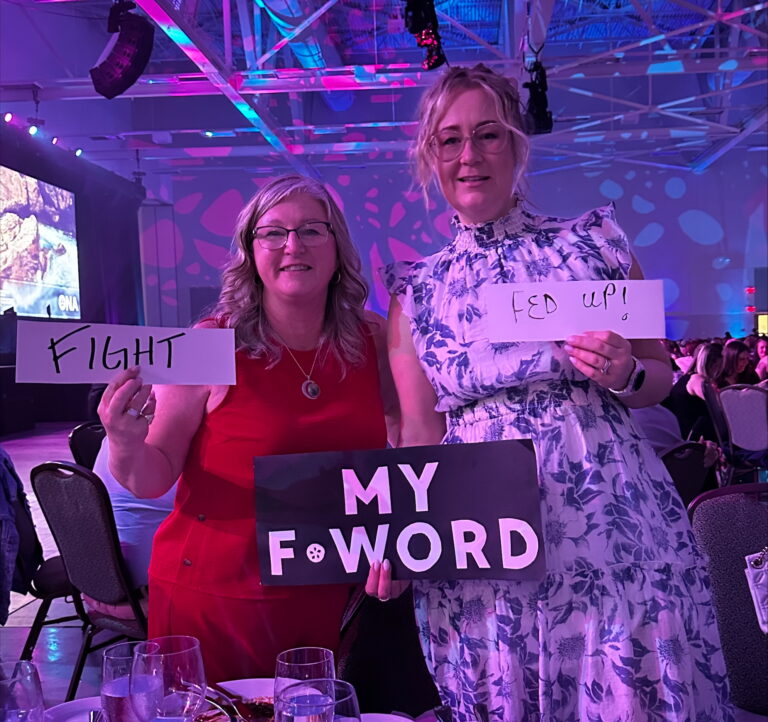
As President of the Ontario Nurses’ Association, I have been following the labour dispute between Air Canada and CUPE flight attendants closely. Many of the issues you face are universal to working people, but the fight for the basic right to be paid for your labour resonates deeply with women everywhere.
I was inspired to see flight attendants standing tall outside airports, surrounding Air Canada officials, making their message heard and felt. But my optimism turned to rage when I read the Minister’s statement directing the Canada Industrial Relations Board to end the strike and refer the dispute to arbitration. Sisters: do not engage. Arbitration in collective bargaining is a trap. I speak as a nurse who has lived under a no-strike regime for over 30 years, alongside 65,000 others in Ontario.
When I became a hospital nurse, I was told my work was so essential I could not strike. Instead, an arbitrator would “replicate” what we might have gained if we were afforded the right to strike. For a time, this “replication principle” meant Ontario nurses bargained meaningfully and were the highest-paid in the country — as you would expect in Canada’s most expensive and populous province. This was short lived.
For 15 years, our contracts have been imposed by labour arbitrators. In terms of wages, we fell from first to third, behind Alberta and British Columbia. In real terms, Ontario nurses today earn less than 15 years ago. Arbitrators have downplayed systemic issues like understaffing, workplace violence, and unpaid work, even when such practices were later ruled illegal. Two years ago, our relative standing was partially and briefly restored, but these systemic issues remained unaddressed.
More recently, the Ontario Hospital Association (OHA) boasted about its “highly efficient” arbitration model yielding better results for government than free collective bargaining. At arbitration, the OHA celebrated “doing more with less”. Translation: Ontario nurses are doing more work, for less pay. In the same presentation, the OHA compared hospital nurses, not to other essential workers like police and firefighters (as they once did), but to store clerks and even office staff with remote work privileges we can never have. This is a deliberate strategy to devalue our work.
The power to strike is the power that forces respect at the bargaining table. Fight for it. Hold on to it. Use it when necessary.
In provinces where hospital nurses still have the right to strike, results are different. Alberta nurses just secured the top pay in Canada, in addition to staffing commitments. British Columbia nurses won enforceable nurse-to-patient ratios. These gains were won at the bargaining table, not in an arbitration room.
In April, we again attended arbitration, armed with expert evidence and hard data about the threat to our health and safety at work. The OHA’s strategy was the same: avoid fair comparisons, devalue our labour, and reject solutions to staffing crises, all while refusing to even acknowledge the physical and psychological dangers Ontario nurses face.
As nurses anxiously await the arbitrator’s decision, one truth has become clear: never surrender your right to strike. The power to strike is the power that forces respect at the bargaining table. Fight for it. Hold on to it. Use it when necessary. Do not believe promises that arbitration will protect you.
Nurses experience firsthand the deliberate undervaluing of women’s work. On behalf of all nurses, I say: we stand tall with you. We support your right to strike. Your fight is not only for respect in your workplace, but for all workers and all women.
Keep up the fight,
Erin Ariss, RN
Provincial President
Ontario Nurses' Association
This is a standard popup that can be repurposed for general site-wide messages.
We use cookies to improve your experience on our website. To learn more, read our privacy policy.