Home care is “hanging by a thread”

(Left to right) ONA Provincial President Erin Ariss, VON bargaining chair Lorna Thompson, OFL President Laura Walton and NDP MPP Wayne Gates pose together while speaking at the VON Press Conference.
(Left to right) ONA Provincial President Erin Ariss, VON bargaining chair Lorna Thompson, OFL President Laura Walton and NDP MPP Wayne Gates pose together while speaking at the VON Press Conference.
On the eve of contract talks between ONA and the Victorian Order of Nurses (VON), home care nurses are telling the brutal truth about their working conditions.
Home care in Ontario is in crisis. It’s understaffed, unsafe for workers and is being forced to rely on private agencies to fill some very big care gaps. During this round of bargaining, VON members’ goal is to negotiate a new, decent contract.
Members put VON on notice that it must respect and pay nurses properly. Registered nurses working in home care are the lowest paid nurses in the province.
As VON members said loud and clear: “We demand equal pay for our work and expect nothing less.”
Wages for many members at VON are so low that many are forced to take on second jobs or visit food banks. Home care nurses are burnt out and leaving the field, and many more are choosing not to work in home care in the first place.
We demand equal pay for our work and expect nothing less.
This mistreatment becomes a cycle, leading to unacceptably heavy workloads that put both nurses and clients at risk. At a time when we expect to see the need for home care balloon in the coming years, now is the time to shore up the system and make sure we have enough staff to do the work – and that they’re treated well.
But it’s not just about wages.
ONA members working in home care often speak about the hazards they face on the job. While many nursing and health-care professions carry risk, the data shows that home care nursing is particularly dangerous.
Over the past two years alone, more than 2,100 workplace violence incidents have occurred in home care. This is five times that of nurses in other health-care sectors, based on Workplace Safety and Insurance Board (WSIB) data, but we know that the incidents are grossly under-reported.
VON nurses travel to their clients’ homes alone, frequently visiting remote areas where there is often little or no cellular signal available. This means they would have no way of contacting anyone for help should they find themselves in a threatening or dangerous situation. They’re on the road constantly, facing many other challenges, especially during wintertime, further risking their safety.
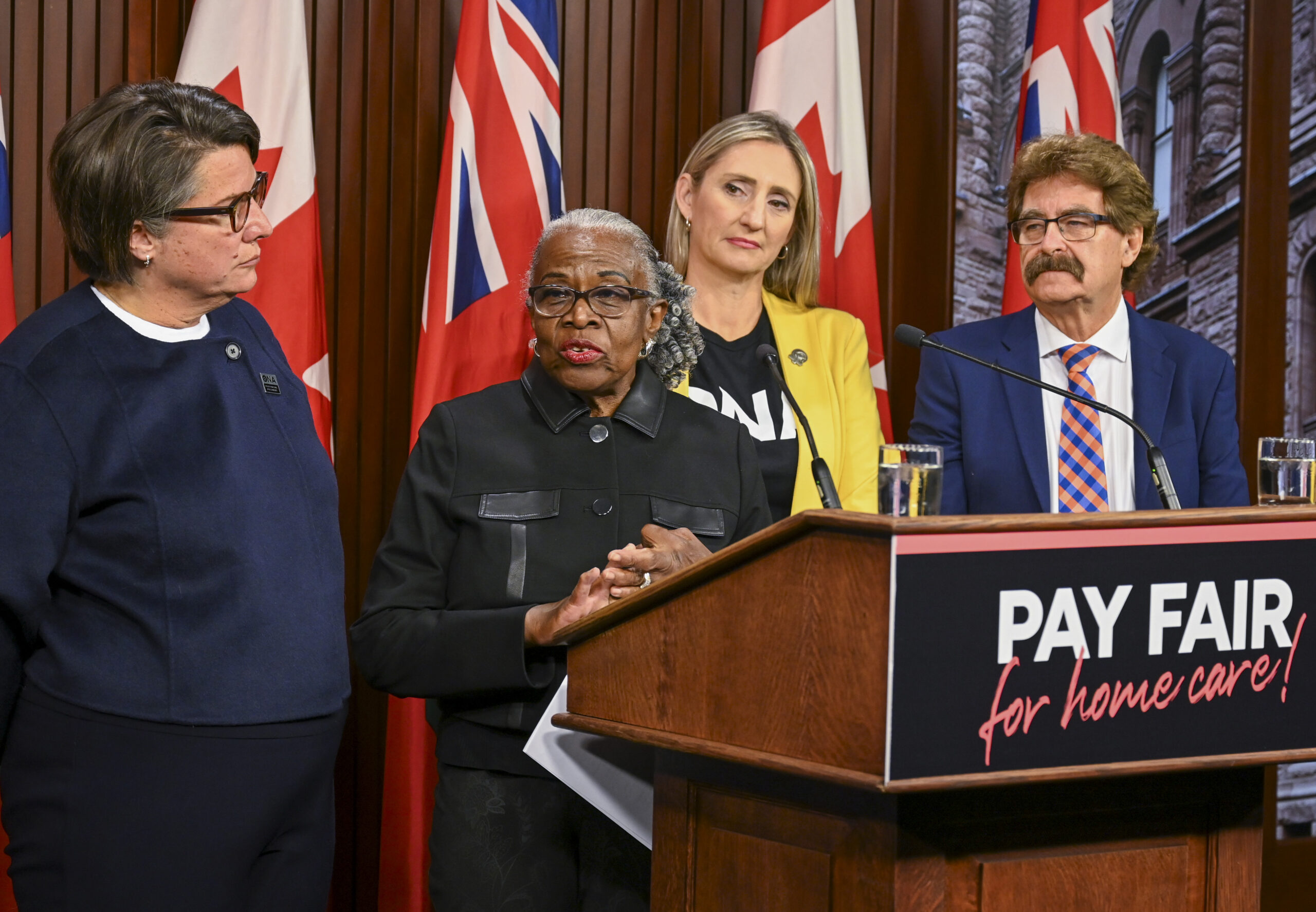
VON bargaining chair Lorna Thompson speaks to reporters as ONA Provincial President Erin Ariss, OFL President Laura Walton, and NDP MPP Wayne Gates look on.
Meanwhile, the employer schedules nurses to see clients back-to-back, even though they may live hours apart, asking nurses to do literally the impossible.
After years of facing so many workplace issues, poor pay and the rising cost of living, many home care nurses are leaving their jobs, and no one can blame them for doing so. Why would you work under such conditions when jobs are available in sectors where nurses get paid enough to make ends meet?
VON nurses aren’t always compensated for the full time they work. Patient loads have dramatically increased (meaning longer patient visits and more travel) but getting approval for overtime that is regularly necessary because of this is very difficult so most nurses don't get it.
There was a time when pay for home care nursing was at a premium and more than enough to support the cost of living. But times have changed. In the past decade, home care nursing wages have fallen by 14 per cent, making them the worst paid RNs in Ontario. This slide has happened as the cost of living has ratcheted.
Without nurses, there is no home care.
This round of bargaining, VON nurses are making a reasonable ask – for VON to pay them fairly and equal to the pay many nurses working in hospital receive.
“We deserve the equal pay,” Lorna Thompson, Bargaining Unit President for VON Toronto-York (Peel site) and chair of the VON Provincial Negotiating Team says. “We're demanding it and we're not going to settle, not this time.”
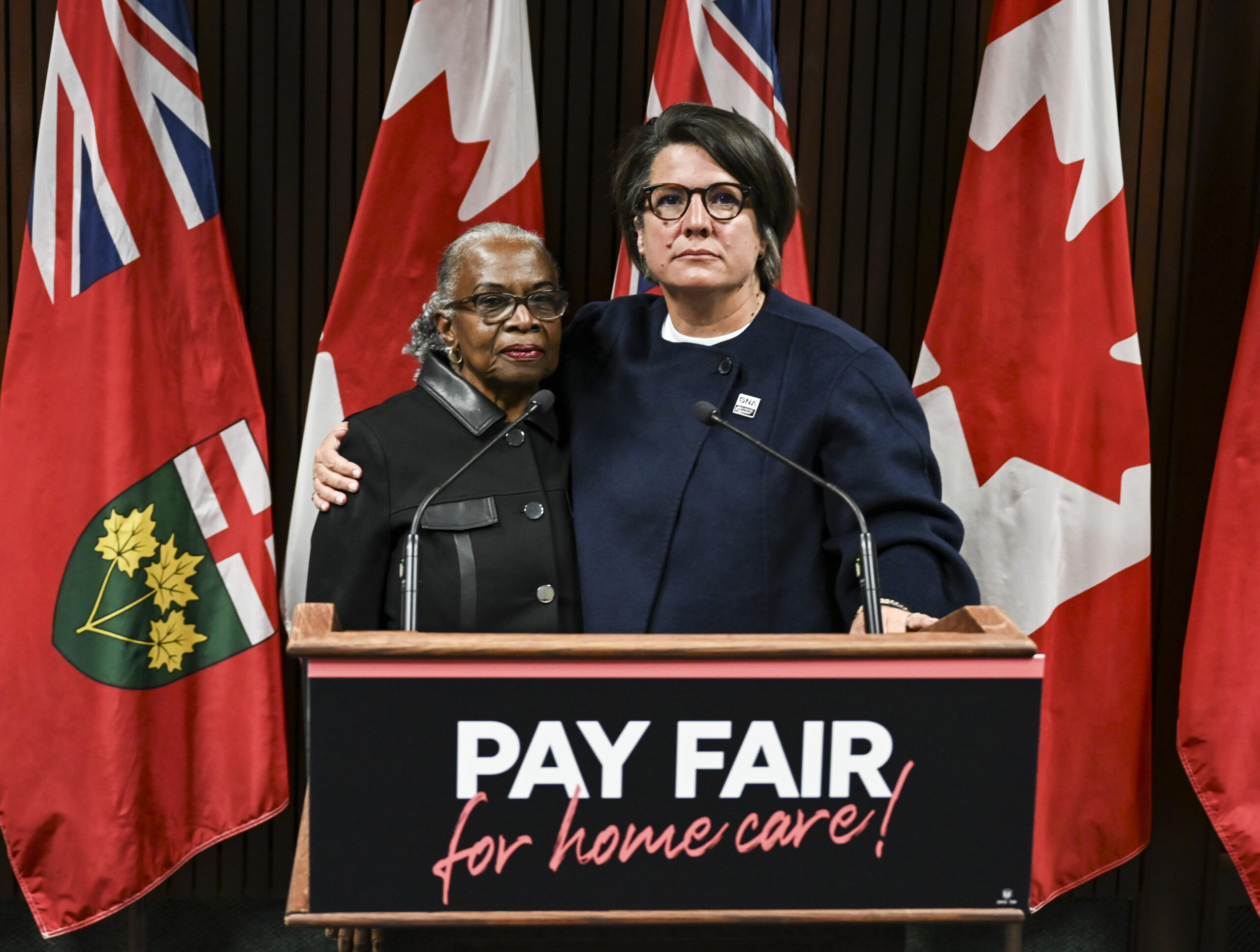
VON bargaining chair Lorna Thompson and ONA Provincial President Erin Ariss show their game faces ahead of bargaining.
Of course, without nurses, there is no home care.
According to Home Care Ontario, over the next six years, Ontario’s over-age-65 population will grow by more than 650,000 people. In 2020, more than 82 per cent of home care recipients said these services helped them stay at home, preventing hospital visits or long-term care.
Ontarians deserve high-quality, timely home care – it’s better for health outcomes, keeps wait times in hospitals and long-term care facilities low, and is more cost-effective.
You can join your fellow members in calling on the Ford government and VON to pay fair for home care and watch the full press conference below.
This is a standard popup that can be repurposed for general site-wide messages.
We use cookies to improve your experience on our website. To learn more, read our privacy policy.