Something wrong on the inside
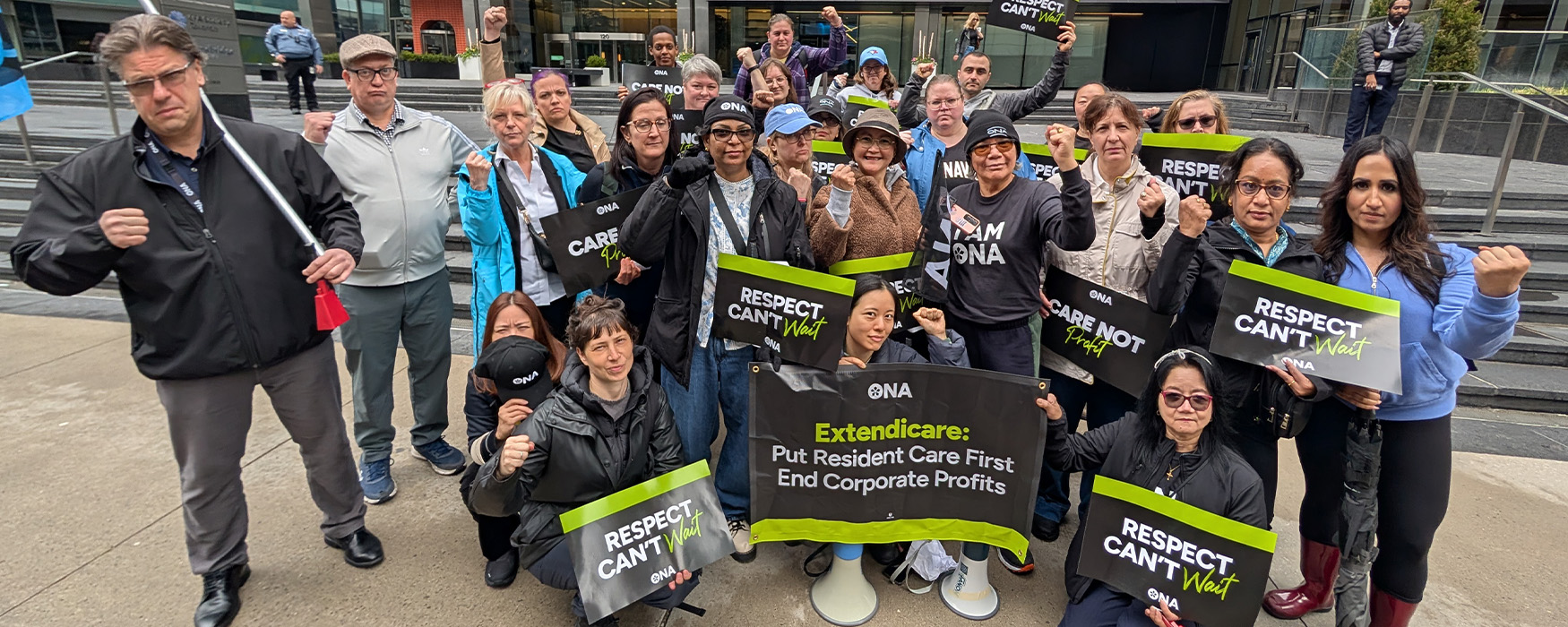
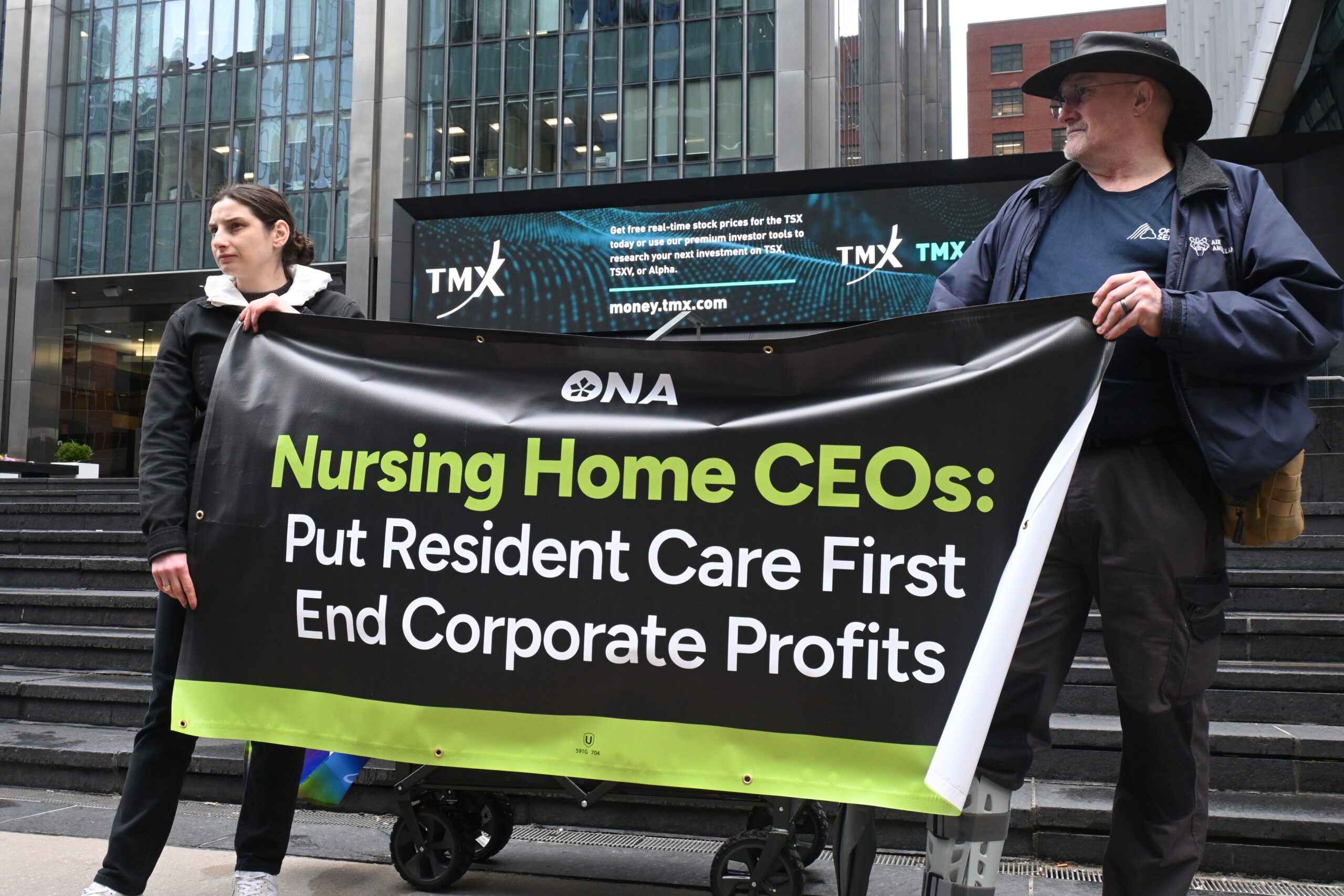
Members show they mean business by demanding care over profits outside an Extendicare shareholders’ meeting in Toronto.


Members show they mean business by demanding care over profits outside an Extendicare shareholders’ meeting in Toronto.
It worked last time, so we did it again.
The week before nursing homes bargaining got underway, ONA members staged a spirited rally outside the downtown Toronto building where the annual shareholder meeting of Extendicare, one of the largest nursing home chains in the country, was taking place, while a small contingent created some disruption of their own on the inside. Just three weeks prior, we crashed the annual meeting of the Ontario Long-Term Care Association, getting plenty of attention. Read about that here.
Our message was the same: better resident care before increased profits. We demand the new Extendicare Board, which includes a chair with a background in private equity and real estate not front-line care, shows us respect by negotiating an agreement with fair wages, benefits and working conditions.
They can afford to. In 2025, Extendicare, which also receives public taxpayer money to operate, reported a record $96 million in profits, up 28 per cent from the previous year, while total compensation of CEO Michael Guerriere was a whopping $2.6 million. Meanwhile, nurses and health-care professionals are paid more than 10 per cent less than hospital nurses for the same care, while being understaffed and under resourced.
“We’re all getting older and will need these services some day,” said ONA member Alison, a strong presence at the rally. “We need to make sure, whether it’s for our parents, other loved ones or ourselves, that it's sustainable and people will want to work in long-term care [LTC]. I’m pumped to be here.”
She wasn’t the only one.
“Membership is a strong foundation for collective action, supporting different sectors within one big ONA that unites us,” explained member Serge, a frequent participant in ONA actions. “We have differences, but a lot of similarities, and that’s what makes us so strong. Let’s go!”
Hospital member Holly added that she attended not just for LTC nurses, but for “the residents who aren’t getting the care they deserve” because of the serious shortcomings in the sector, while colleague Layla emphasized she “wants the Ford government to give what is proper to nurses and for us to be heard.”
For LTC members like Mirela, who also proudly marched outside the shareholder meeting, that’s critical.
“Nurses are the ones who are with residents when they take their final breath, but in the end, they’re the last to be heard. And that's not right.”
But actions like this give us hope.



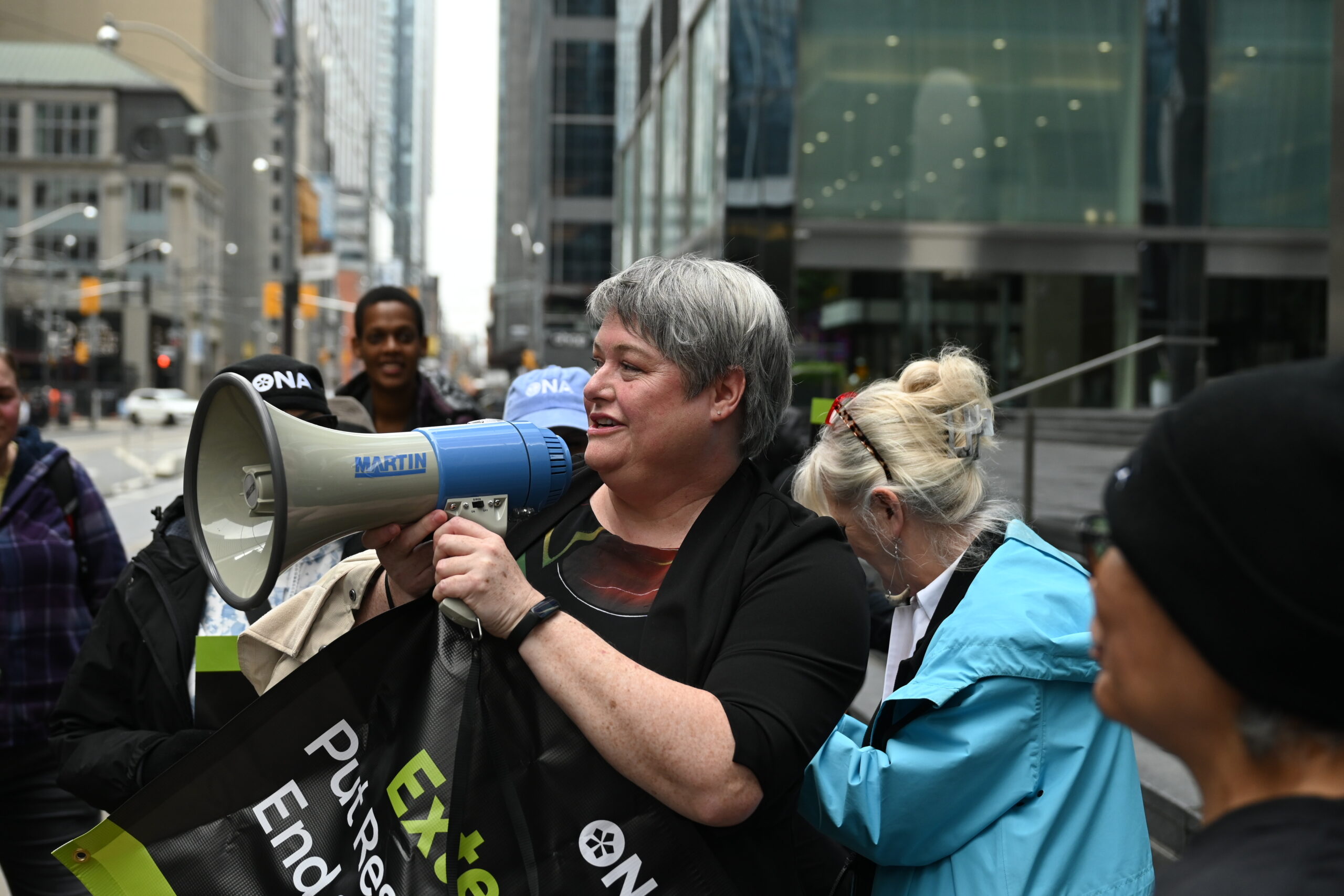
In fact, after walking the pavement holding hard-to-miss signs, yelling clever chants and cheering wildly at the honks of passing cars for almost two hours, members received an update on what went on inside the shareholder meeting from ONA Region 3 Vice-President Karen McKay-Eden and member Monica, who asked questions of Guerriere from the floor mic.
“I said, ‘aren’t you concerned that as money goes to profit, residents are left with less, and that by prioritizing short-term profits, you’re creating conditions of care that are unsustainable and will lead to long-term problems?’ relayed McKay-Eden. “He cut me off before I could ask the last question, so we decided to go up and talk to him. He acknowledged that our 10 per cent wage disparity statistic is true, so I asked, ‘what are you going to do about that?’ People who work in long-term care love it, but they’re leaving for hospitals. They don't have a choice. They have bills to pay and mouths to feed. They need to be compensated fairly.”
They talk about investing in buildings, beds and technology and how AI is going to give us better nursing, but nurses have to be at the bedside.
Added Monica, “they talk about investing in buildings, beds and technology and how AI is going to give us better nursing, but we have to be at the bedside, and interacting with residents and their families. We don’t need a more absorbent pad; we need more nurses at the bedside. We talked about how care starts with people, not with projects, algorithms or computers.”
She also told the group how appreciative she was to have members on the sidewalk showing solidarity while they were in the meeting because “the combined effort is impactful. They’re always afraid of nurses when two or more of us get together!” And while she admitted she was nervous to ask a question inside, “I got through it and encourage all of you to keep asking questions and standing up.”
And perhaps member Jane summarized the action best.
“It’s so important to support long-term care members. We never give up, and together, we can and will win!”
Learn more about nursing homes bargaining here.
This is a standard popup that can be repurposed for general site-wide messages.
We use cookies to improve your experience on our website. To learn more, read our privacy policy.