An ONA member who works as a home care and fire line nurse in Ontario’s far north is embracing the Métis ancestry that she didn’t know she had for most of her life.
“My grandmother was Indigenous, but married a White man,” explains Wendy Houston, who lives in Red Rock, a small town on the shores of Lake Superior just over 100 kilometres east of Thunder Bay. “Her family was forced to the road allowance outside the reserve in Lestock, Saskatchewan until she and my grandfather settled in Red Rock. Growing up, my grandma didn’t want her kids, including my father, to know they had any kind of Indigenous blood for fear of discrimination.”
While she was raised with some Indigenous traditions and her grandmother and her sisters spoke English, French and Cree, Houston was also never specifically told she was Métis, although she strongly suspected it.
“When we grew up, kids didn’t ask questions in adult conversations unless we were told to speak. So, I couldn’t ask any about any of that. I grew up not knowing for sure. Now when I look back, I think, what the heck?”
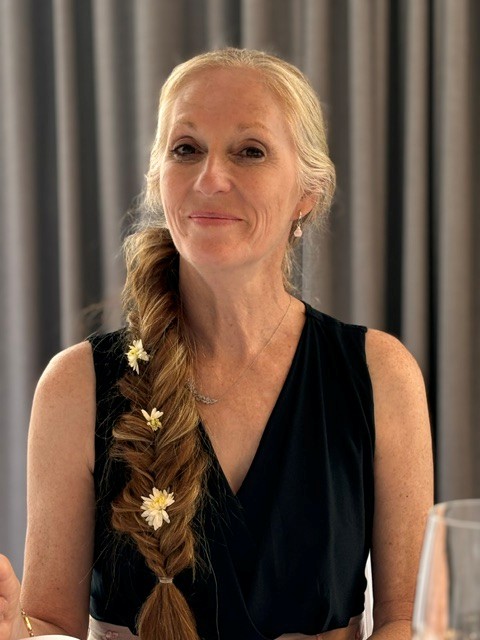
ONA member Wendy Houston, RN.
When Houston was a young teenager, she and her sister started looking into their background – until their father stopped them. It wasn’t until 15 or so years ago that her sister resumed that search and discovered the truth.
That’s when Houston says they “embraced what we are, started hearing all kinds of back stories, and obtained our Métis citizenship,” along with her dad and his brothers and sisters.
“My dad's still scared to say it,” she states. “He’s hesitant. The rest of the family was a little bit hesitant at first too, but not so much anymore.”
Sadly, there’s a reason for that.
Although Métis are one of the three federally recognized Indigenous groups within Canada, along with First Nations and Inuit, they’re often silenced from claiming their culture, rights and truths, hence why they’re frequently referred to as Canada’s “Forgotten People.” Métis experience systemic racism through colonialism, residential schools, discrimination, the child welfare system and the erasure of their rights.
People call us "half-breed" even to this day; I hear that all the time.
“People call us ‘half-breed’ even to this day; I hear that all the time,” relays Houston, who is a citizen of the Métis Nation of Ontario (MNO) as she lives in this province, but her ancestry comes from Manitoba, Saskatchewan and Alberta. “Technically, it’s true that we’re half-Indigenous and half-European, but that term is meant to be derogatory.”
But it’s her ancestry that has also helped Houston gain the trust of many of the Indigenous clients she serves as an Victorian Order of Nurses (VON) RN in some of the remotest regions of the province.
“I’ve been a nurse in the First Nations reserves here for 28 years and they all know me, some knew my grandmother, and me being Métis isn’t a big deal to them,” she explains, noting she also worked at the Nipigon Hospital and at the mill in Red Rock as an occupational nurse. “Because I’m from here and I know everyone, they trust me.”
She adds that the situations she “experiences as a VON nurse, let alone as an Indigenous nurse, in the north is unsettling,” to say the least.
“I’ve been caught in a community during a lockdown twice because there was an active shooter and a SWAT Team was called in. I often have no cell service, so I can’t call 911 if I need help. I’m driving in the winter in very bad weather, not getting paid much per kilometre. And I actually do more in this role than when I was a hospital nurse, including having the only LVAD [left-ventricular assist device] pump patient in Northwestern Ontario, but we don’t get paid the same. So, yes, there are many challenges, but this work found me, not the other way around.” (Read how ONA is fighting for a fair VON collective agreement here).
As her VON has a contract with the Ministry of Natural Resources, Houston has also served as a fire line nurse for 25 years.
“I fly to wherever there is a huge forest fire and am the sole nurse for the camp,” she explains, noting she loves this work so much she would have done it full-time if not for being away from her three children for long periods of time. “I have a whole station and a helicopter dedicated to me. I go out into the field to either jump and take care of injured firefighters or bring them into whatever our satellite hospital is. Most nurses don’t want to stay there that long; it’s just not for them. But I’m OK with the bears and the bush.”
With all this going on, it’s hard to imagine how Houston has time to also serve as the President of the Thunder Bay and District Council for Ontario Métis, which is an MNO chartered community council that represents Métis citizens at a local level, and as an Indigenous representation on ONA’s Anti-Racism, Equity and Human Rights Board Committee.
“I always wanted to join, but I was scared,” she admits. “I thought what can I do for them? I know they’re going to listen, but are they really going to hear? Are they going to say, oh, you’re Métis and not First Nations because that’s what everyone says? And then last year I said, that’s it, I’m doing it.”
She credits ONA Region 3 Vice-President Karen McKay-Eden, who holds the portfolio of Anti-Racism, Equity and Human Rights, Senior Manager of Member Education/Anti-Racism and Anti-Oppression (ARAO) Kieran Maxwell, ARAO Specialist – Reconciliation Brigitte Goar and ARAO consultant Rose LeMay for helping her transition into this role and speaking her truth.
“I have a big weight on my shoulders for the whole province, but they're helping so it doesn't feel so heavy. They’re open to my ideas and suggestions, and are actually figuring out how to move them forward. That’s huge and I want to thank ONA for giving me this chance.”
But, she adds, effecting change takes time.
“We were stagnant for a very long time, but ONA has taken big strides and I’m really grateful for that. We’ve seen where the deficits are – I’m not going to call them faults or negatives because they weren’t; just things we didn’t act on. And now we’re doing something about it.”
Noting that she enjoys “teaching new things, especially to people who come at me with misconceptions and stereotypes,” Houston emphasizes that education is the key to Truth and Reconciliation.
Ask questions instead of coming with your already formed opinions that probably aren’t true.
“Learning and teaching yourself is so important. Ask questions instead of coming with your already formed opinions that probably aren’t true. So many people think Indigenous people are uneducated, stupid and don’t eat right. That’s just not true. People are often surprised to learn that I’m Métis with a degree.
“That ignorance isn’t my problem; it’s theirs. And that’s a lack of education. When I tell them, nine times out of 10 they apologize or say thank you for enlightening me or giving me that information. Even if you can change one person’s misconception, you’ve done something positive.” (Find out how you can bring reconciliation into your daily life here).
Houston also believes there needs to be more Indigenous training in nursing schools.
“You could end up in Nunavut as an RN. You could end up anywhere. You need to know the three distinct Indigenous groups that exist, for starters. You can’t just read an article, write a paper and then you’re done for four years. Students aren't getting that education, which is important.”
She would also love to see more Indigenous people in elected roles to represent their unique needs.
“What the government says and what they do are two different things. Just look at that mining bill [Bill 5] the Ford government pushed through [to expedite the development of the Ring of Fire region]. Look what’s going on in Alberta with talks of separation. That’s Indigenous land, and they don’t have the right to do that!”
As she reflects on where she is now, Houston says she gets emotional knowing that she’s doing what her grandmother was unable to do because of her fear.
“If she could see me now, what I've done for our family, and what I've done by just being Métis, she would be very proud of all of us, including my dad and his brothers and sisters who didn't want it to be known. And I think that's the biggest thing I can do for us and the next generation.”
Learn more about Truth and Reconciliation here.
This is a standard popup that can be repurposed for general site-wide messages.
We use cookies to improve your experience on our website. To learn more, read our privacy policy.