Members demand justice for Grassy Narrows
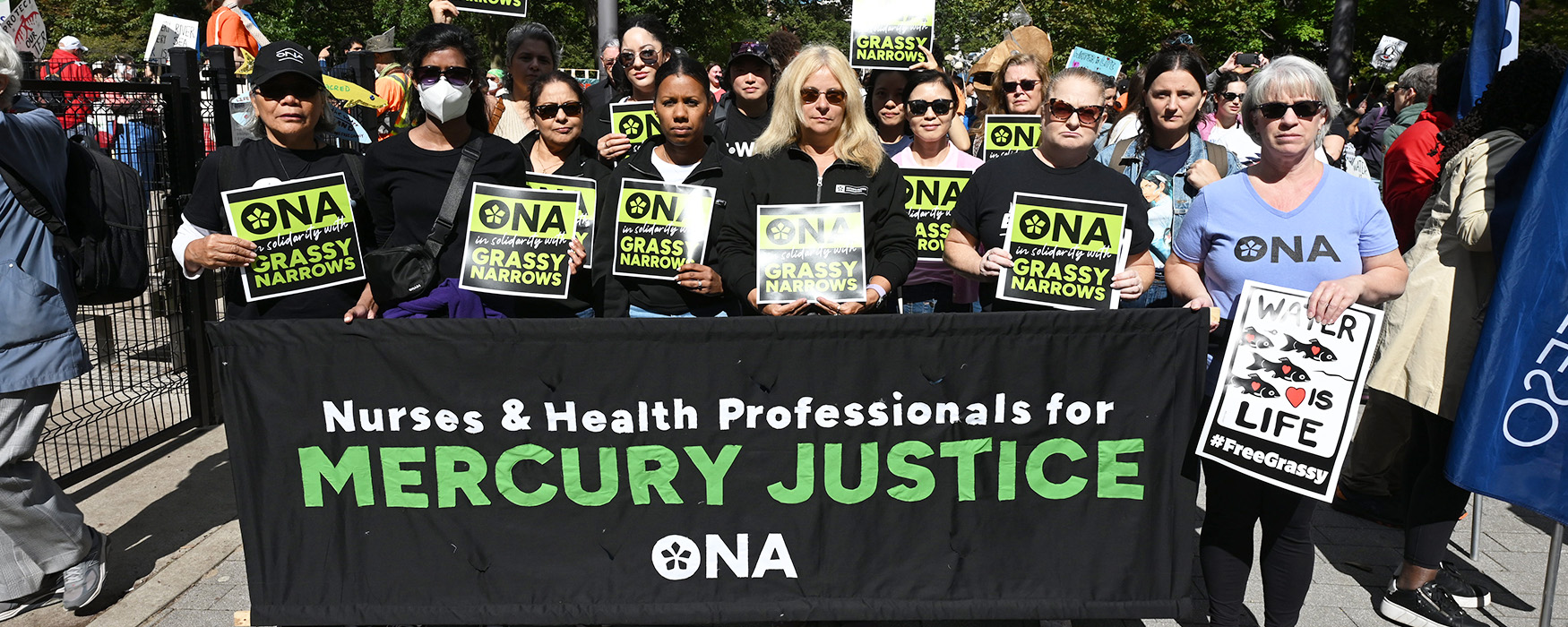
ONA members and staff stand behind our banner of solidarity at the start of the Grassy Narrows River Run through the streets of Toronto on September 23.


ONA members and staff stand behind our banner of solidarity at the start of the Grassy Narrows River Run through the streets of Toronto on September 23.
When ONA member Lisa thinks about the dire situation at Grassy Narrows First Nation, where residents are still fighting for justice and protection from the mercury poisoning inflicted on them decades ago, a certain person comes to mind.
“I was wondering when Premier Doug Ford stands at the window of his cottage, looking at the lake and thinking how beautiful it is, if he could think instead about the people in Grassy Narrows, and just say, why? Why do I have a clean lake at my vacation home when people don’t have clean drinking water in their community? It’s just wrong. Very, very wrong.”
It’s for that reason that Lisa and a contingent of ONA members and staff participated in the Grassy Narrows River Run on September 23 in downtown Toronto. The run brought together Grassy Narrows residents, who travelled more than 1,700 kilometres from their reserve in Ontario’s far north, near the Manitoba border, along with thousands of supporters from labour unions, environmental groups and faith-based organizations. That included retired ONA member Karen.
“I worked in the north and saw some of the bad things that happened,” she relays. “And it angered and upset me, and I felt crushed by it. I don’t feel crushed now because I can do something about it, even if it’s only coming here and demonstrating. I have to do that because the situation is ongoing, and people have been affected and are dying.”
She’s sadly not exaggerating. Between 1962 and 1970, the Dryden Mill dumped approximately 10,000 kilograms of mercury into the Wabigoon River, which led directly into a massive river system, poisoning the water consumed by Grassy Narrows residents to this day (a 2024 study from the University of Western Ontario shows that mercury contamination has been made worse by ongoing industrial pollution).
While Grassy Narrows residents have demanded justice from both the federal and provincial governments, those pleas have gone ignored, forcing them to hold blockages to prevent logging of their land and further mercury poisoning.
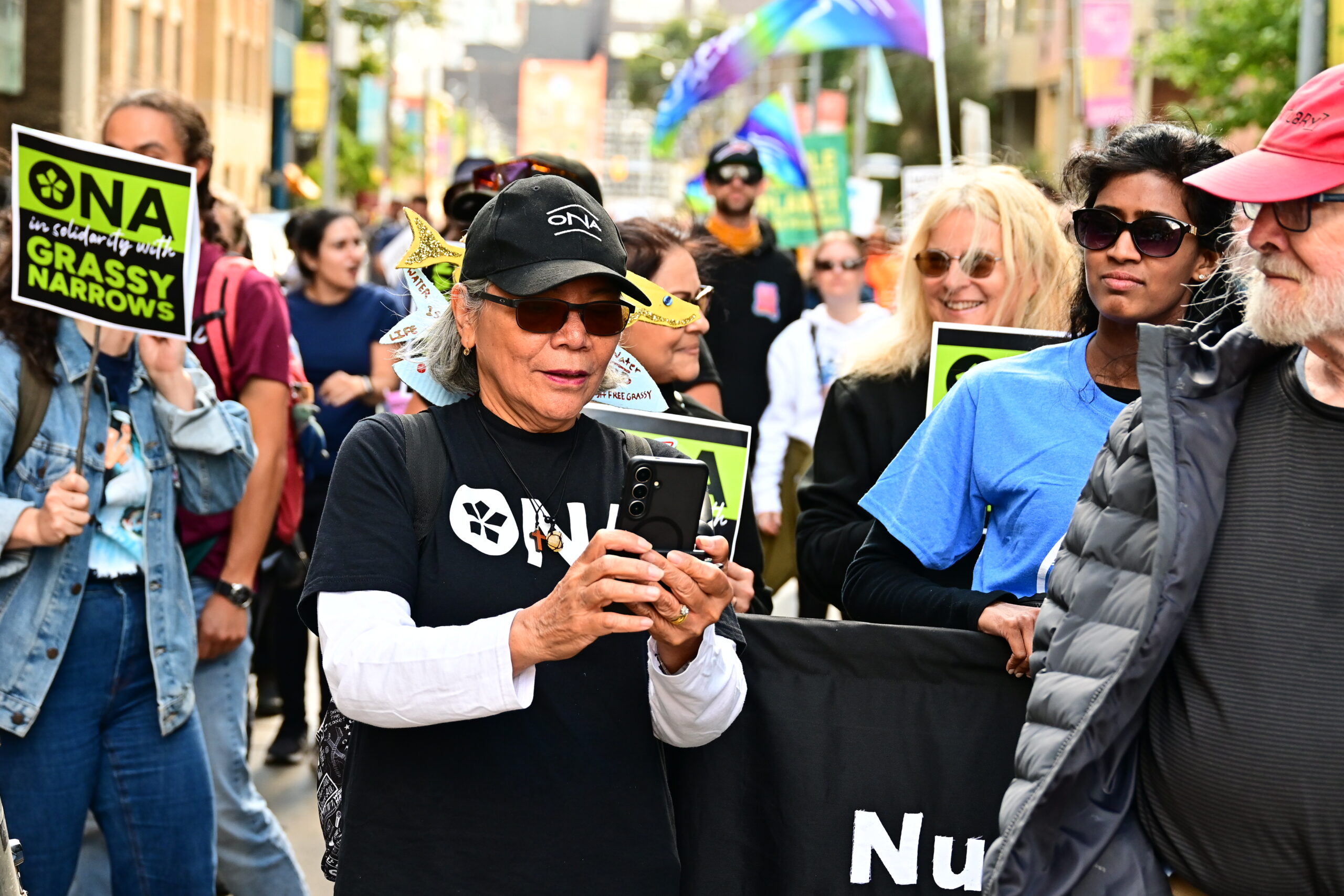
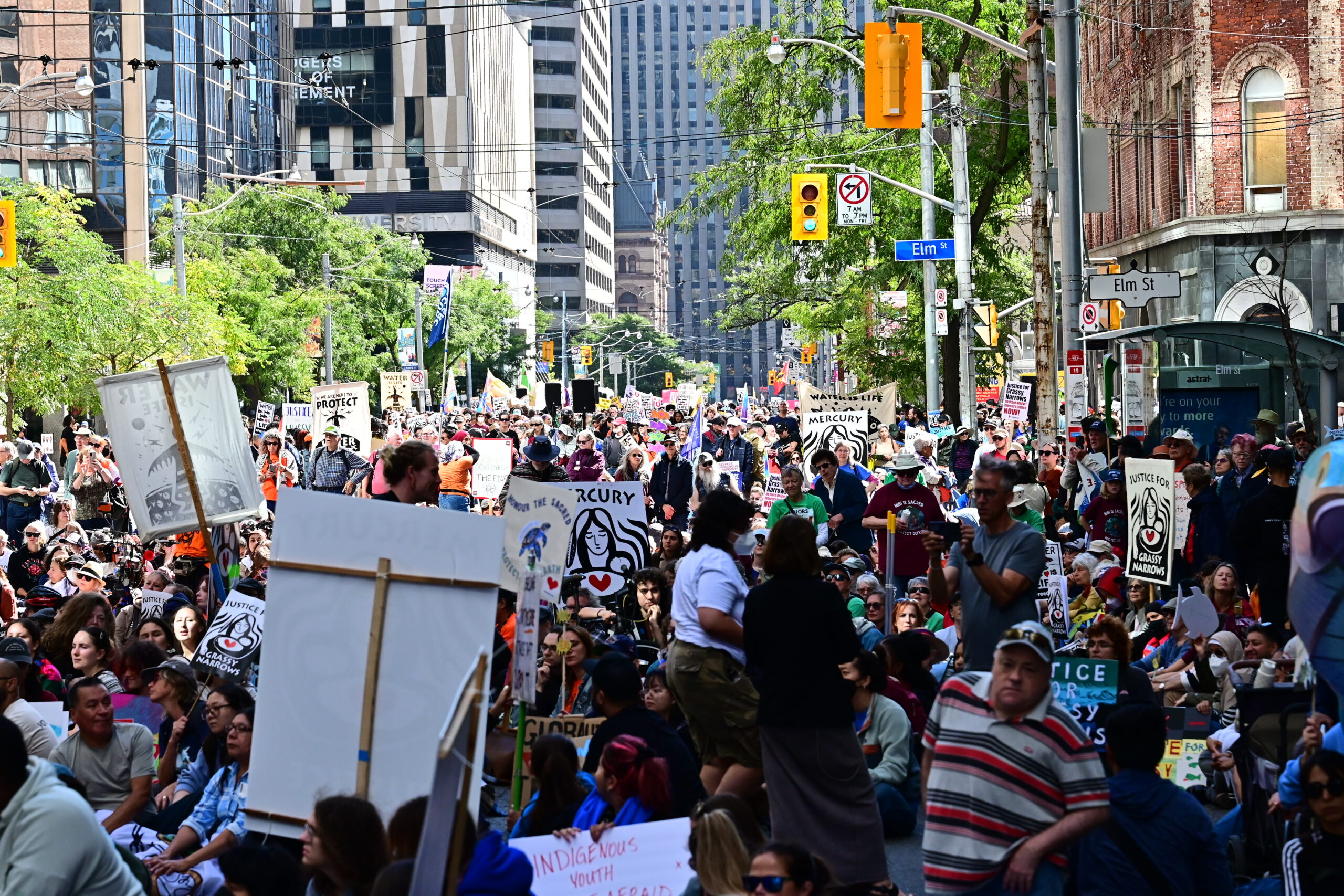
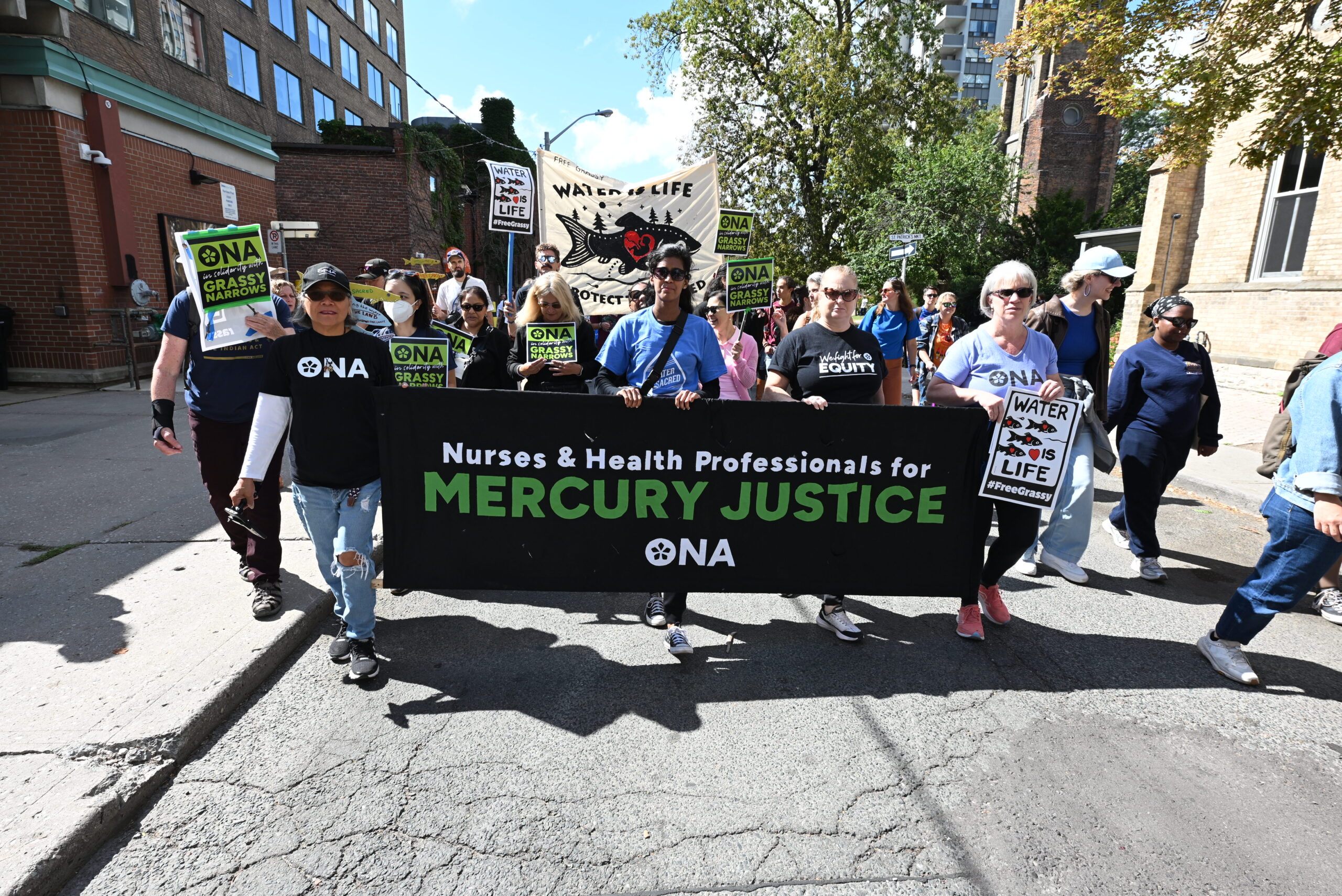
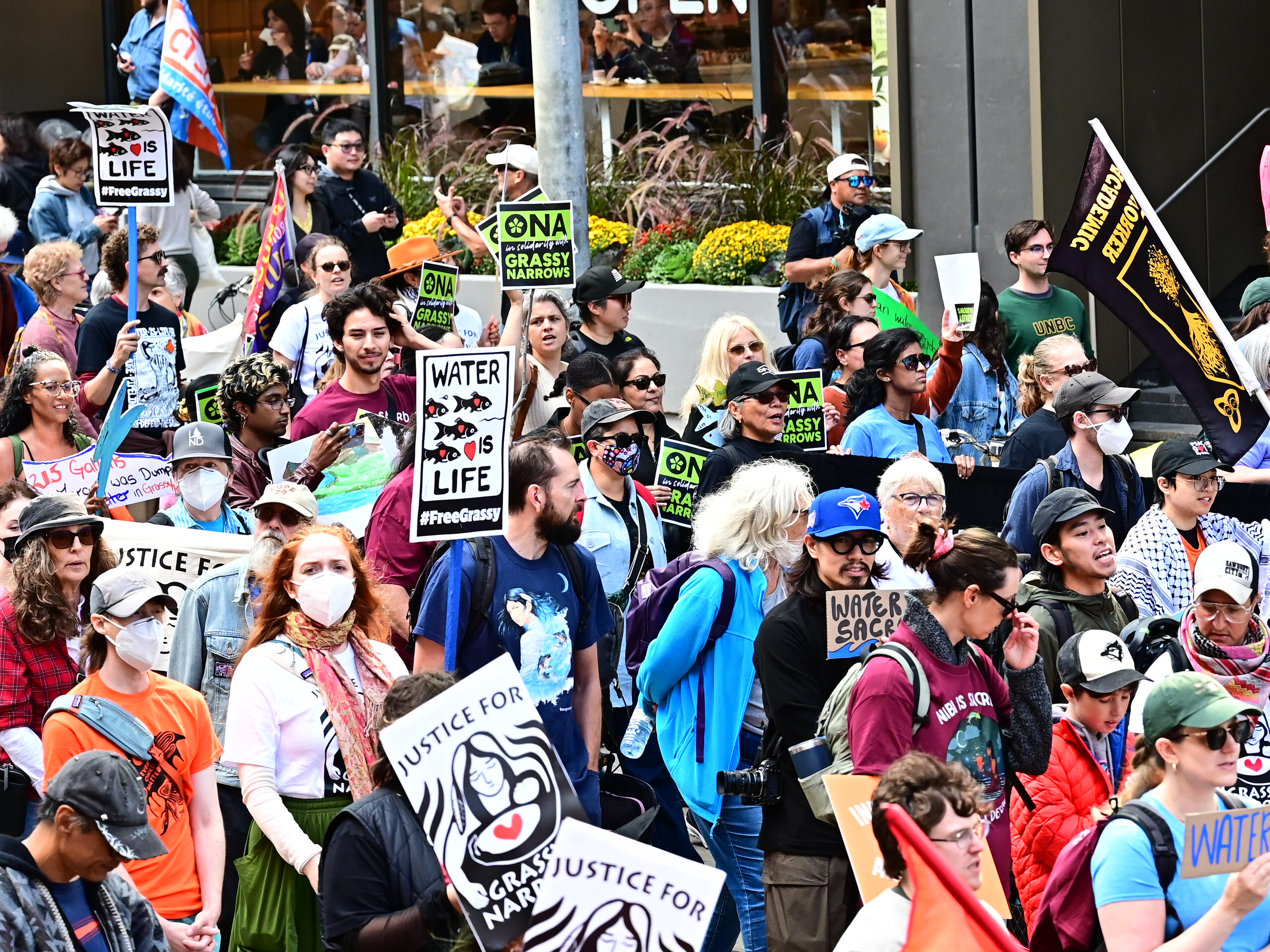
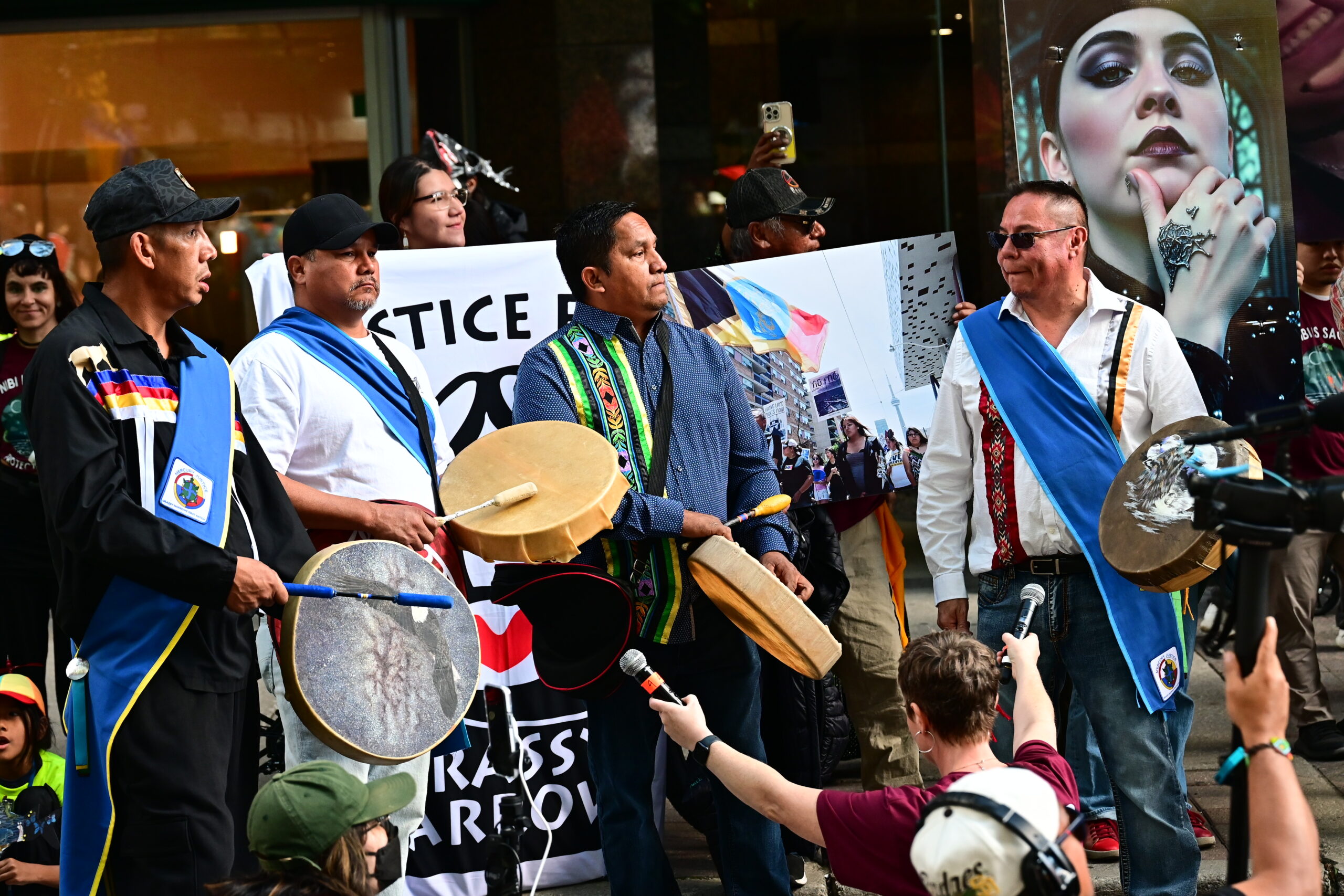
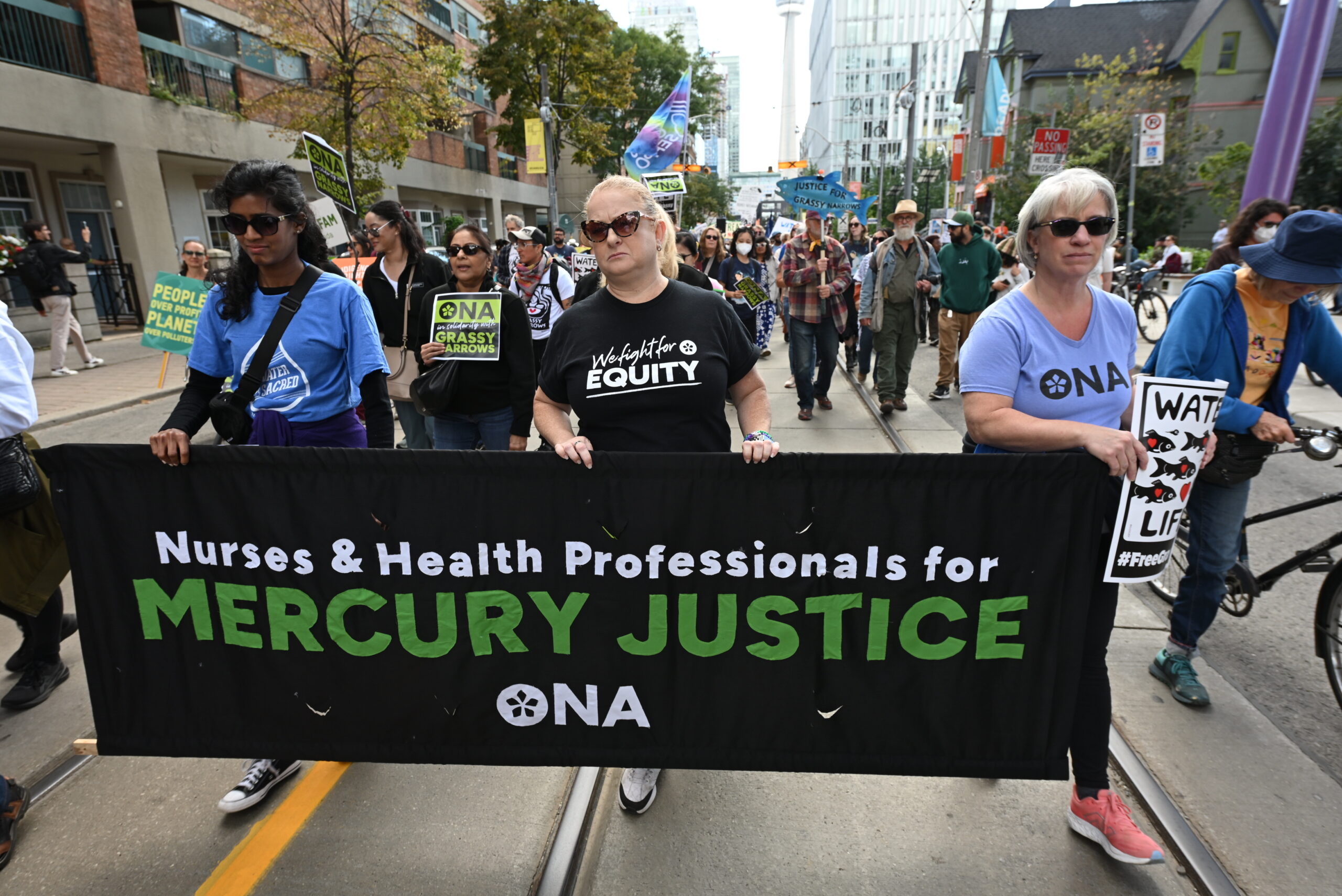
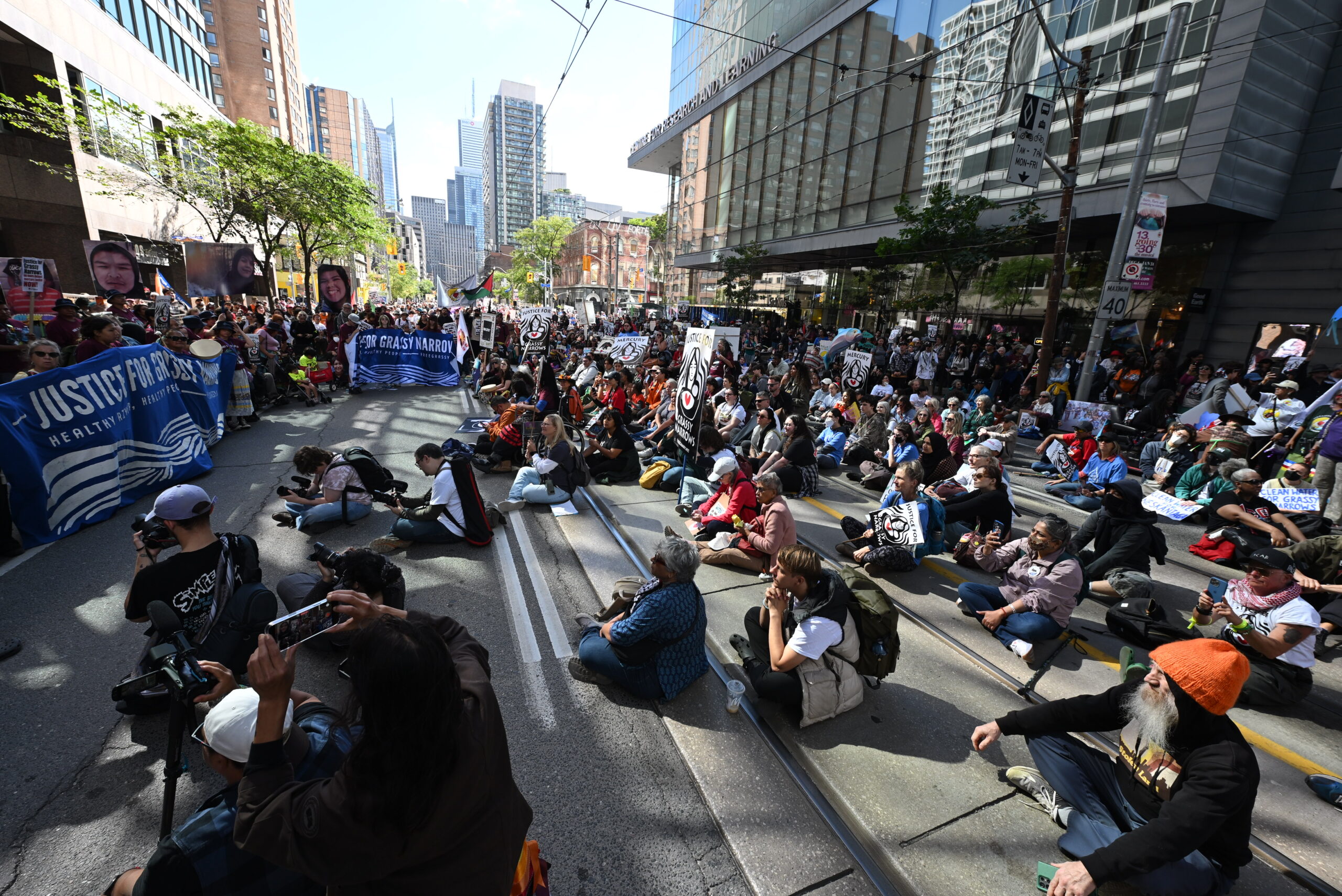
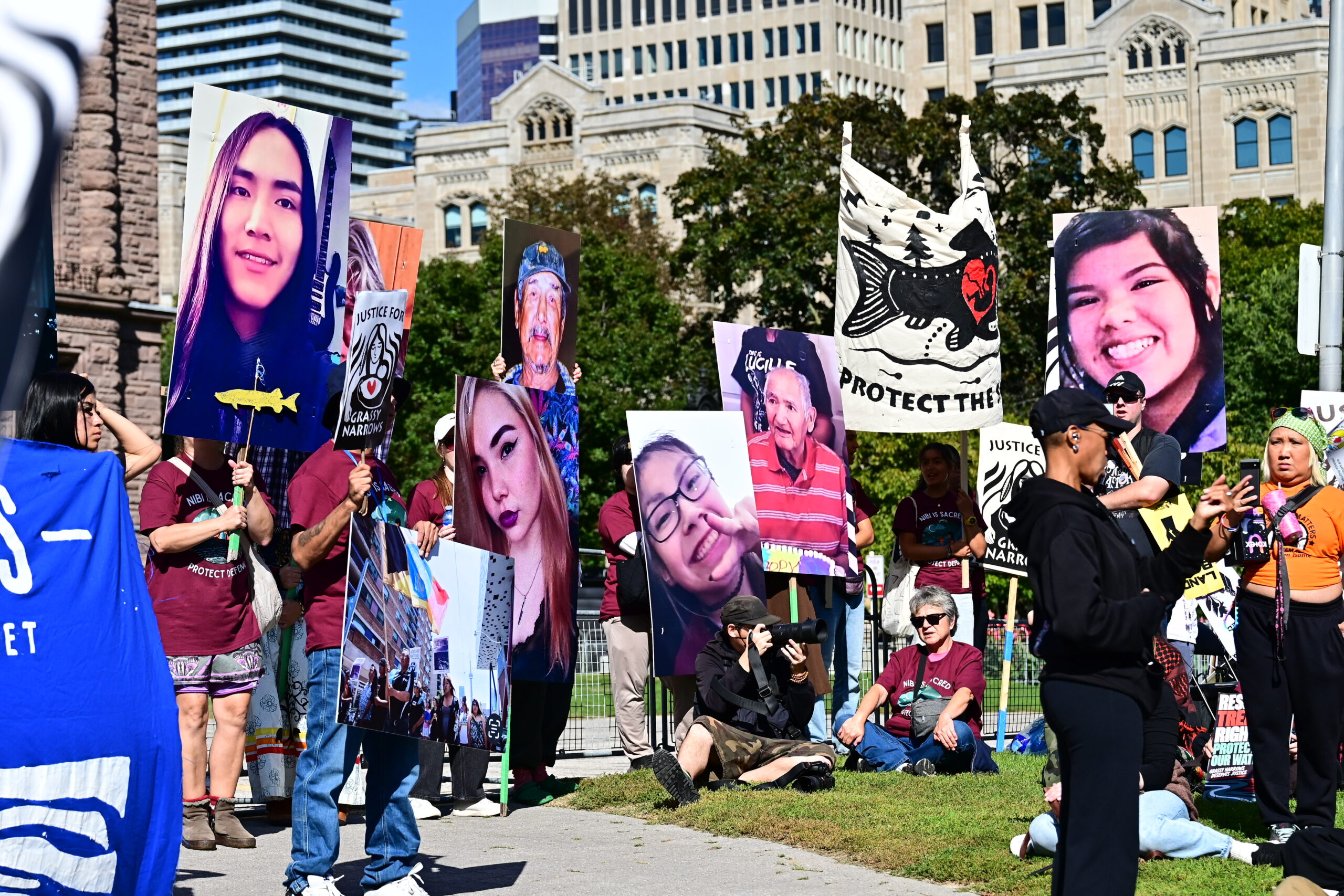
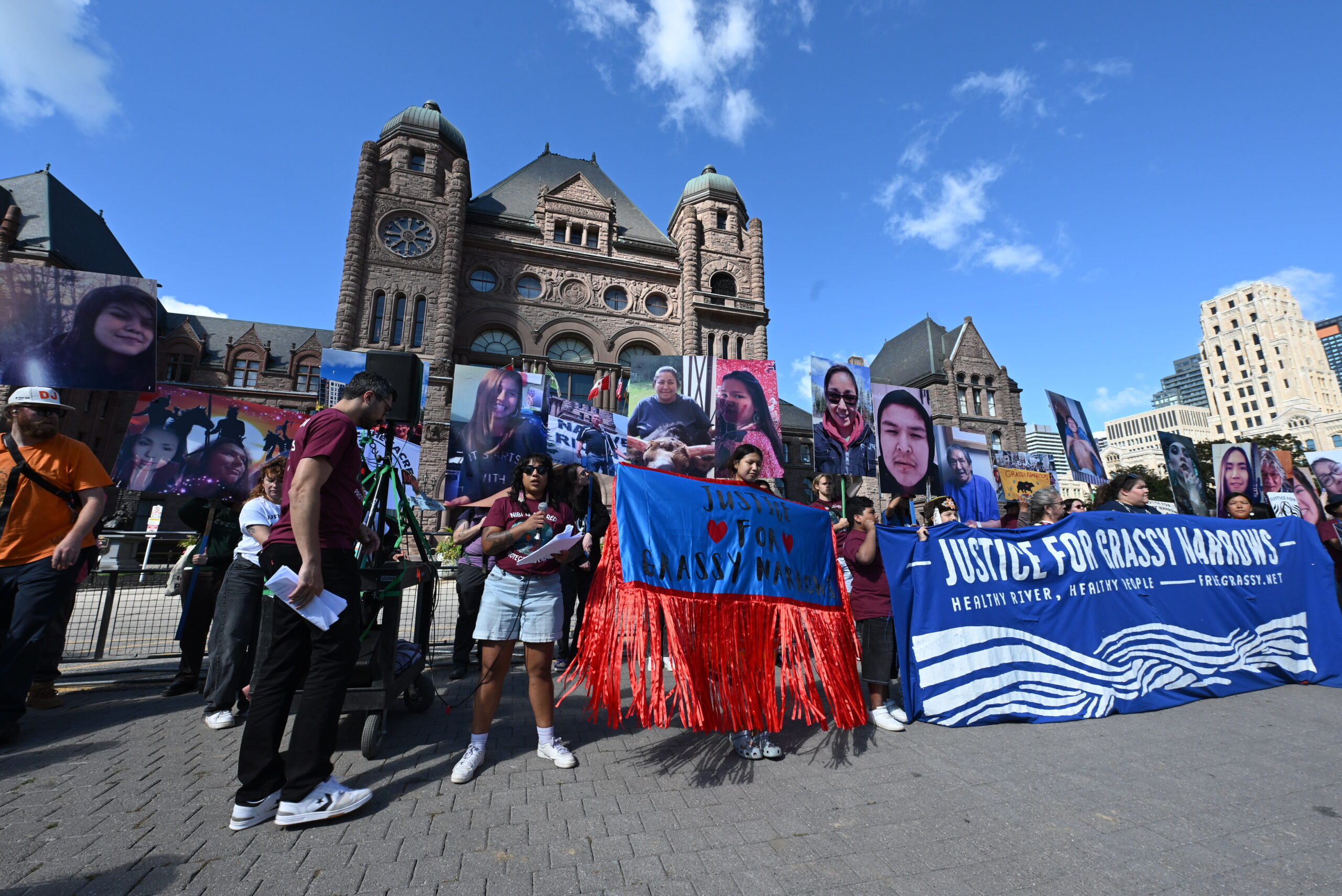
ONA’s contingent joins thousands of others at the Grassy Narrows River Run, which began at Toronto’s Grange Park before heading to Queen’s Park, with a stop along the way for a moment of silence at the Indigenous Services Canada office for those who have died from mercury poisoning.
The river run began at Toronto’s Grange Park before making its way on city streets to Queen’s Park, with a moment of silence at the Indigenous Services Canada office along the way to honour those who have died. The group is demanding compensation for every Grassy Narrows resident for the mercury crisis, support to restore their community and way of life from the damage done, and an end to pollution by closing the Dryden mill responsible for the contamination and the mining and nuclear waste plants that threaten their reserve.
In this day and age, why does anyone in Canada have dirty water?
“In this day and age, why does anyone in Canada have dirty water?” asks member Peggy, who helped carry the standout ONA banner that read, “nurses and health-care professionals for mercury justice.” “Water is life. I live in Scarborough, right down the road from the Pickering Nuclear Generating Station and I have clean water to drink, so I don’t understand. We have the technology and the ability to make sure that other places have clean drinking water too. This is absolutely crazy.”
Throughout the four-hour event, the group chanted, held photos of those who had tragically died from the mercury crisis, handmade signs and placards, including a gigantic white fish, symbolic of the toxicity of the water on a key source of food for Grassy Narrows, and listened to guest speakers, including Chief Sherry Ackabee, residents, other supporters and politicians such as Indigenous MPP Sol Mamakwa, who acknowledged and thanked “the supporters who are here today. We need to come together to make changes.”
Member Anissa was one of those supporters, explaining, “it doesn’t matter if you’re a billionaire or a person on the street, you need clean water. So, the fact that we’re out here in 2026 fighting for this basic human right that everyone needs is sad, but it’s all part of being a health-care professional.”
Something else many consider being part of being a health-care professional? Helping to educate others.
“I’m also here today because more people need to know about this situation,” adds Karen, which member Gloria, attending a Grassy Narrows River Run for the first time after reading about it through ONA and other sources, also says she is committed to doing.
“I will start sending messages to my Facebook and Instagram groups,” she promises. “So many people don’t know a lot about Grassy Narrows and this information must be relayed. They have to know that Indigenous people need justice. I believe in human rights, and will educate and advocate for others to help and support them.”
ONA Provincial President Erin Ariss also acknowledges that we have a lot of work to do as an organization to build relationships, trust and partnerships with Indigenous people.
“Learning their history and struggle under colonization is an important step for all of us but an even more critical step is responding to their requests for partnership and solidarity for critical causes such as this one. I’m so proud to see our members come out and provide that support.”
This is a standard popup that can be repurposed for general site-wide messages.
We use cookies to improve your experience on our website. To learn more, read our privacy policy.