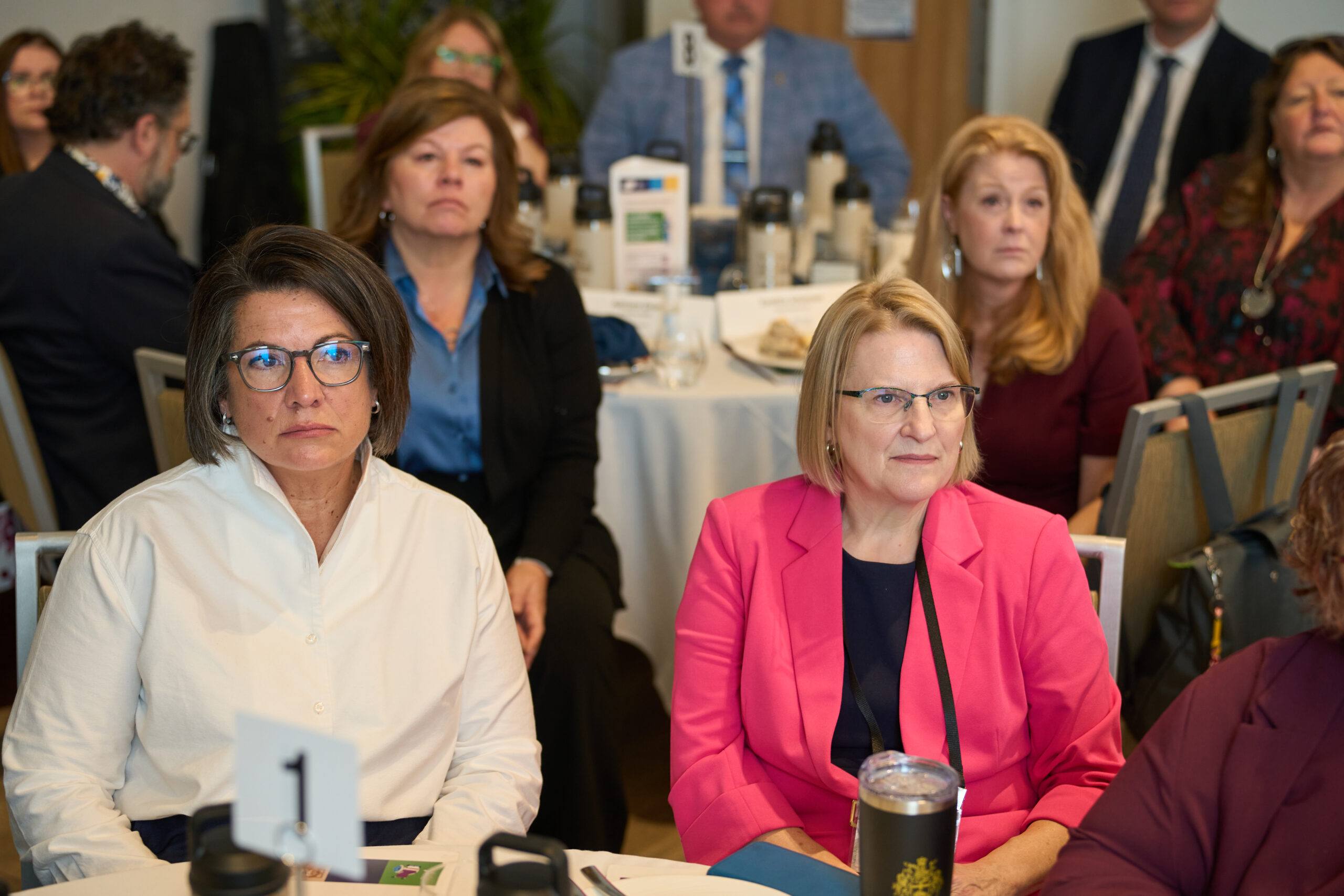
At a recent policy breakfast held in Winnipeg with federal and provincial health ministers, the Canadian Federation of Nurses Unions (CFNU) provided much needed solutions to improve seniors’ care.
The breakfast, held during the Health Ministers Summit on October 16, was also attended by leaders of provincial nurses’ unions, including ONA Provincial President Erin Ariss and CEO Andrea Kay. During the session, CFNU President Linda Silas highlighted key findings in her organization’s latest report, Healthy aging, dignified care.
“Canada is long overdue on implementing a national seniors’ care strategy that puts older Canadians first,” she says. “The COVID-19 pandemic was a wakeup call to the urgent need to reform seniors’ care, but too little has been done in the last six years to improve it.”
Lessons learned
The new CFNU report shares lessons from seniors’ care in Denmark around person-centred care, staffing standards, prevention and rehabilitation programs, and memory care. This past May, ONA member and (then) Nursing Homes Provincial Negotiating Team Chair Joann Carey was part of a CFNU contingent travelling to the small Scandinavian country to examine its long-term care (LTC) system, and returned with many observations of her own. Read her first-hand account here.
At the policy breakfast, which also featured guest speakers such as Dr. Samir Sinha, a geriatrician and expert in the care of older Canadians, Silas emphasized the need for a pan-Canadian health human resources plan to help address staffing challenges in LTC. The Canadian Institute for Health Information has reported more than three million overtime hours clocked by LTC workers over a one-year period – the equivalent of 1,500 full-time care providers.
“Canada needs a shift in our approach to seniors’ care that prioritizes aging in the right place. Healthy aging starts at home,” she explains. “At the same time, nurses in long-term care facilities report working chronically overcapacity, and they report the highest rates of violence. We need to support our seniors and our long-term care workers with strong legislation that enforces mandatory quality standards and dedicated long-term funding.”
Close to home
Specifically, the CFNU is calling for a national seniors’ care strategy that prioritizes care close to home and aging in the optimal place, mandatory standards for staffing seniors-focused health services, proactive disease prevention and rehabilitation programs, pay parity for workers, and increased funding and cohesive frameworks to enable nurses and other health-care workers to deliver high-quality comprehensive care.
“Canada needs a shift in our approach to seniors’ care,” Silas concludes. “A robust national plan would ensure Canada’s seniors have access to the care they need, while reducing the impact on the rest of the public health-care system. Nurses and health-care workers are stretched too thinly and Canada’s population is aging. It’s time to act.”